Ronald Reagan once observed, “Politics is supposed to be the second oldest profession. I have come to realize that it bears a very close resemblance to the first.” Franklin Roosevelt personified that truth.
Read MoreAl Smith Vs FDR
Al Smith vs. FDR
By Lawrence W. Reed
Which of the two major political parties declared the following, verbatim, in its official 1928 platform?
We demand that the constitutional rights and powers of the states shall be preserved in their full vigor and virtue. We oppose bureaucracy and the multiplication of offices and officeholders.
We demand a revival of the spirit of local self-government, without which free institutions cannot be present…[W]e pledge business-like reorganization of all the departments of the government; elimination of duplication, waste and overlapping; and substitution of modern business-like methods for existing obsolete and antiquated conditions…
The taxing function of governments, free or despotic, has for centuries been regarded as the power above all others which requires vigilant scrutiny to the end that it be not exercised for purposes of favor or oppression.
Answer: The party of Jefferson, Jackson and Cleveland. That would be the Democratic Party. Surprised? That’s because on many issues, the Democratic Party of today looks nothing like what those three men stood for.
Even at their best (more than a century ago), when they argued for balanced budgets, low taxes, sound money, and free trade, Democrats cooked up some nasty stuff. They invented Jim Crow, for example (see links below). But through Cleveland’s second term in the 1890s, at the national level they generally promoted a restrained and responsible federal government.
Then Woodrow Wilson jerked the party to the left upon his election in 1912. Under Wilson—an ardent segregationist, philanderer, and ivory tower prima donna—we got the income tax, the direct election of senators, the Federal Reserve, price controls, inflation, censorship, war, and lots of new bureaucracy. Wilson believed his job was to get around the Constitution, not uphold it.
The country became sick enough of all that in 1920, when it turned to the Republicans—electing Harding that year, Coolidge four years later, and then Hoover in 1928. In opposition, the Democrats at least partially backtracked to their pre-Wilson animus toward a large central government.
Even as late as 1932, in fact, the Democrats sounded more like Cleveland than Wilson. Their platform that year demanded a 25 percent reduction in federal spending and denounced Hoover’s tax and tariff hikes. As their presidential nominee in 1932, Franklin Delano Roosevelt was elected on those promises, which he proceeded to break from Day One on (see links below).
Students today, smothered as they typically are by dishonest or uninformed socialist-leaning teachers and professors, are rarely told of FDR’s switcheroo. Instead, they are taught that Hoover was a laissez faire president who produced economic disaster, which FDR promised to fix by ballooning federal spending and power. The truth is far closer to the very opposite.
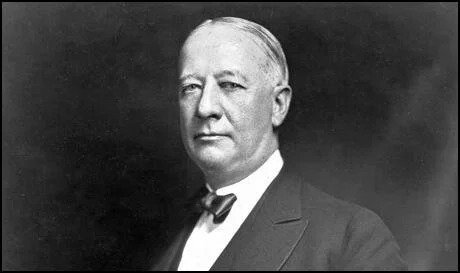
You don’t have to take my word for it, and you can ignore if you want the growing number of objective scholars who have come to the same conclusions. But you should know that there were plenty of Democrats at the time who rebelled at FDR’s apostasy. The one I want to tell you about here possessed impeccable Democratic Party credentials. He was a Speaker of the New York State Assembly, Governor of the State of New York twice, and the presidential nominee of the Party in the 1928 election, no less. His name was Al Smith.
Smith said what he meant and meant what he said. He was an honorable man who believed a promise was a promise, not a deception to use for momentary advantage and to be discarded later for the sake of power. Long before FDR’s first term was over, Smith spoke out about the president’s lies and broken pledges. I call your attention to two speeches he delivered in 1936.
One was a radio address which you can listen to here.
In those remarks, Smith noted that FDR wasted no time in trashing the 1932 party platform. As soon as the New Deal commenced, that solemn document “was out of the picture.” He described the treachery this way:
Never, so far back as I remember, did anyone ever see so complete a repudiation of a platform in letter, in spirit, in principle, and in detail. The people who voted this administration into power on the assumption that it stood for a certain set of principles found out afterwards that they had been entirely misled, and have put at the head of the government a group of men bent upon a program that outraged millions of citizens throughout the United States…And in place of the platform the New Deal administration encouraged and extended government competition with many lines of private business and instituted governmental control and regulation of business by setting up bureaucratic commissions which in many instances are not only unconstitutional but distinctly socialistic.
It has wastefully and extravagantly spent more money in four years than all previous administrations in this country from George Washington to Woodrow Wilson. It has increased taxes, direct and indirect, putting a heavy levy on the working class of our people. It has defied the economics as well as the divine law by a program of planned scarcity. By killing animals and plowing under crops it has thrown out of work millions of men who have been forced onto the government relief rolls….
It is made up largely of impractical theorists, college professors, and young men who are bitterly opposed to our constitutional system of government…It has done whatever it possibly could to raise class against class, the poor against the rich, that have stirred up acts of antagonism of all our people who know and realize that the Constitution is our bulwark against repression, the sanctuary of our hopes and ambitions, and the tabernacle of our liberties.
The other speech I call to readers’ attention was delivered by Smith at a Liberty League dinner in Washington in January 1936. It was reprinted in full here. Key excerpts are the following:
[T]he people of the United States were in the lowest possible depths of despair, and the Democratic platform looked to them like a star of hope, it looked like the rising sun in the East to the mariner on the bridge of a ship after a terrible night, but what happened to it?
First plank: “We advocate an immediate drastic reduction of governmental expenditures by abolishing useless commissions and offices, consolidating departments and bureaus, and eliminating extravagance, to accomplish a saving of not less than 25 per cent in the cost of the Federal Government.”
Well, now, what is the fact? No bureaus were eliminated, but on the other hand the alphabet was exhausted in the creation of new departments and—this is sad news for the taxpayer—the cost, the ordinary cost, what we refer to as "housekeeping costs" over and above all emergencies, that ordinary housekeeping cost of government is greater today than it has ever been in any time in the history of the Republic.
Al Smith pointed out that the 1932 platform called for a balanced budget. But by doubling federal spending instead of cutting it, FDR cursed the country with a flood of red ink and massive new debt. The president, among many other sins, foisted a horrendous price control scheme on the country called the National Recovery Act, which Smith denounced as “a vast octopus set up by government that wound its arms around all the business of the country, paralyzed big business and choked little business to death.”
If FDR had followed his party’s 1932 platform instead of the destructive New Deal nonsense of his dim-witted advisors, we might have avoided up to seven years of economic depression.
Allow me to further quote this Smith speech word for word. It’s worth reading, I promise you:
Make a test for yourself. Just get the platform of the Democratic party and get the platform of the Socialist party and lay them down on your dining-room table, side by side, and get a heavy lead pencil and scratch out the word “Democratic” and scratch out the word “Socialist,” and let the two platforms lay there, and then study the record of the present administration up to date. After you have done that, make your mind up to pick up the platform that more nearly squares with the record, and you will have your hand on the Socialist platform; you would not dare touch the Democratic platform. And incidentally, let me say that it is not the first time in recorded history that a group of men have stolen the livery of the church to do the work of the devil. If you study this whole situation, you will find that it is at the bottom of all our troubles. This country was organized on the principles of a representative democracy, and you can’t mix socialism or communism with that. They are like oil and water. They are just like oil and water, they refuse to mix.
Now, it is all right with me if they want to disguise themselves as Karl Marx or Lenin or any of the rest of that bunch, but I won’t stand for their allowing them to march under the banner of Jackson or Cleveland.
Yes, I suggest to them that they dig up the 1932 platform from the grave that they buried it in and read it over and study it, read life into it and follow it in legislative and executive action to the end that they make good their promises to the American people when they put forth that platform and the candidate that stood upon it 100 per cent—in short, make good!
When FDR ran for a second term in 1936, Smith campaigned for his Republican opponent, Alf Landon of Kansas. The two Democrats mended fences when World War II broke out, but Smith never forgot FDR’s betrayal of their party’s platform. And sadly, of course, this time there was no turning back for the Democrats. They’ve moved even further left in the decades since FDR.
The lesson of all this reminds me of something the British author Genevieve Cogman said a few years ago: “We shouldn’t be playing politics. We should be focusing on what’s important.”
For additional information, see:
The 1928 Democratic Party Platform
Al Smith Radio Address About FDR’s New Deal Betrayal
Text of Alfred E. Smith at Anti-New Deal Dinner in Washington (New York Times)
Great Myths of the Great Depression by Lawrence W. Reed
FDR Campaigned on Fiscal Restraint but Delivered the Opposite by Lawrence W. Reed
Myth: FDR Was Elected on a Progressive Platform by Lawrence W. Reed
The Great Crash and Depression 90 Years Later by Lawrence W. Reed
Media are Still Peddling Myths About the Great Depression by Lawrence W. Reed
Joe Biden Knows Jim Crow Well by Lawrence W. Reed
The History of Jim Crow Laws by Lawrence W. Reed
New Deal or Raw Deal: How FDR’s Economic Legacy Has Damaged America by Burton W. Folsom
FDR: A New Political Life by David T. Beito
The Great Depression from a Neo-Classical Perspective by Harold L. Cole and Lee E. Ohanian