
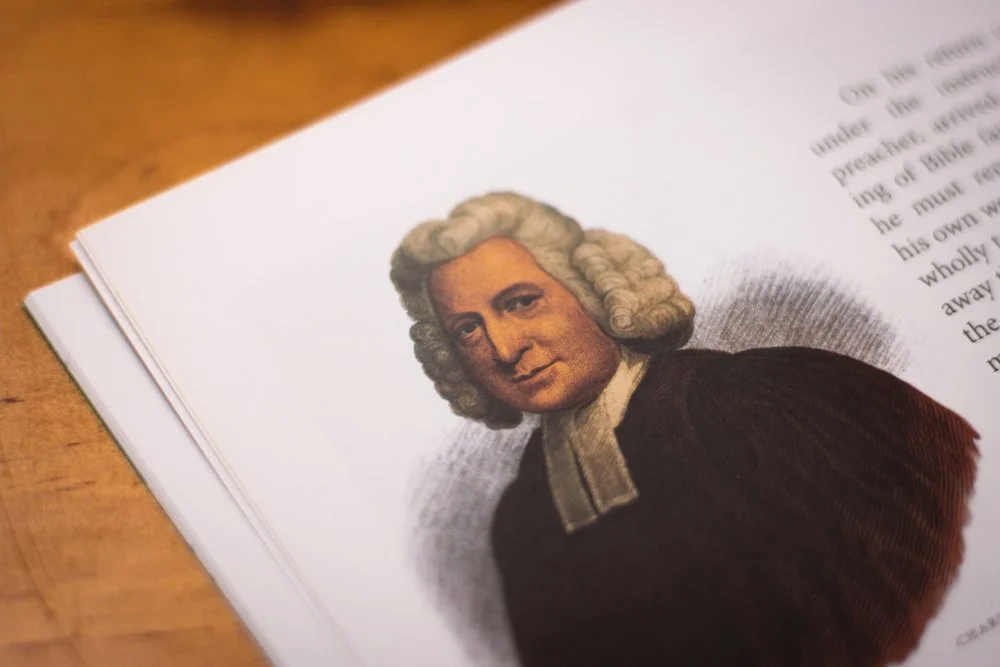
The patriots who gave us the Declaration of Independence, who shed blood and tears to create a new and free nation, were the progeny of the Great Awakening and its broader, political and philosophical ally, the Enlightenment.
Read MoreThe Great Awakening: Liberty From the Pulpit
The Great Awakening: Liberty From the Pulpit
By Lawrence W. Reed
In the 17th century, religious freedom in the early American colonies was far from universal. Massachusetts Bay was a Congregationalist theocracy that demanded conformity, for example. It famously expelled Roger Williams and Anne Hutchinson for questioning the conventional wisdom of the official church.
Rhode Island, Maryland, and Pennsylvania were notable for their openness to all faiths, but elsewhere along the Eastern seaboard, full toleration and separation of church and state would have to wait.
By the time of the Constitution in the late 18th Century (with its provision against government “establishment” of religion), religious freedom was a hallmark of life in the new United States of America. The consensus among the clergy by that time was expressed well by Rev. Samuel Stillman of Boston in 1779. He noted that though Christians will always find reasons to disagree on some theological matters, they are united on the need to “enjoy the blessings of a free and equal administration of government” in a commonwealth where all faiths and denominations are “protected but none established.”
What happened in the intervening years to affect this change?
A skeptic might well argue, as some have, that government had to bring the hammer down and tell people of faith to butt out of public affairs and stop forcing their beliefs on others. But that’s not what happened at all. For centuries in old Europe, churches and states were usually joined at the hip. In 18th century America, however, it was Christians, not the government, that increasingly pushed for separation and tolerance. For that, we can be thankful to the pastors and congregations of the “Great Awakening,” a movement for spiritual renewal that emphasized passionate preaching, the right to think and worship freely, bravery on behalf of what’s right, and a direct relationship between the individual and God. It occurred in the late 1730s and early 1740s and it shook the very foundations of Christendom.
A movie that debuted on Easter weekend (2026) may stimulate new interest in this evangelical revival, especially as it influenced the American Revolution a few decades later. The film, called “A Great Awakening,” tells the story of one of the movement’s pre-eminent leaders, George Whitefield, and his friendship with Benjamin Franklin. The performances of Jonathan Blair and John Paul Sneed in the roles of Whitefield and Franklin, respectively, are breathtakingly good. As we celebrate the country’s 250th anniversary this July, we should remember that the Great Awakening played a major part in stoking the embers of liberty and independence. (If you are interested in Whitefield’s preaching, see Sermons of George Whitefield.)
In his 1989 book, The Democratization of American Christianity, Nathan Hatch argued that the Great Awakening was more than just a religious event. Its intellectual foundations elevated the individual. It emphasized that God did not make us to be tyrannized over by men or their rules. We are made to be free, and when men seek to deprive us of our freedom, or to put us to sleep so their hegemony remains unchallenged, they must be opposed. The state is not God. As Paul wrote in 2 Corinthians 3:17, “Where the spirit of the Lord is, there is freedom.”
In a meeting in London with British Admiral Howe on the eve of the Revolution, Franklin (paraphrased here from the movie) warns the admiral against underestimating American patriots. “Now that they have dealt with the tyrant within themselves,” says Franklin, “they have mustered the courage to confront the one across the sea.”
The patriots who gave us the Declaration of Independence, who shed blood and tears to create a new and free nation, were the progeny of the Great Awakening and its broader, political and philosophical ally, the Enlightenment. Many of those patriots heard or read the sermons of preachers who were on the front lines of the Great Awakening, or from those who were but one generation removed and greatly influenced by their predecessors.
In a sermon in 1777, clergyman Samuel Webster of Salisbury, Massachusetts, declared:
No man denies but that originally all [men] were equally free. Men did not purchase their freedom, nor was it the grant of kings, nor from charter, covenant, or compact, nor in any proper sense from man: But from God. They were born free.
In 1977, Liberty Fund published “They Preached Liberty,” a collection of quotes from New England ministers during the American Revolution and in the years preceding it. In the book’s Introduction, Franklin P. Cole wrote,
For a generation before 1776, the congregations of New England had heard and read many “declarations of independence.” Sermon after sermon referred to the “natural rights of life, liberty, and property.”
The collection of quotes assembled by Cole in that little volume are revealing and profound. I share some of them here as a tribute to those American patriots who were both men of God and lovers of liberty:
The Scriptures cannot be rightfully expounded upon without explaining them in a manner friendly to the cause of freedom – Rev. Charles Turner, 1773.
Needless taxes are not for the good, but the misery of the subjects, tending to reduce them to poverty and distress; and may therefore be justly considered as wanton, undisguised oppression to support the pride, ambition, and extravagance of a few grandees – Rev. Robert Ross, 1775.
Unlimited submission and obedience is due to none but God alone…And to suppose that he has given to any particular set of men a power to require obedience to that which is unreasonable, cruel, and unjust, is robbing the Deity of his justice and goodness – Rev. Samuel West, 1776.
But wherever public spirit prevails, liberty is secure. There men may think freely for themselves, and publish their sentiments without molestation or fear. For as liberty is the source of so much public happiness, he who is a patriot and wishes well to his country must needs be a fast friend to it – Rev. Noah Welles, 1764.
The colonists are men, and need not be afraid to assert the natural rights of men; they are British subjects, and may justly claim the common rights, and all the privileges of such, with plainness and freedom – Rev. Jonathan Mayhew, 1766.
All men are naturally in a state of freedom, and have an equal claim to liberty. No one by nature, nor by any special grant from the great Lord of all, has any authority over another. All right, therefore, in any to rule over others, must originate from those they rule over, and be granted by them – Rev. John Tucker, 1771.
The doctrine of non-resistance and unlimited passive obedience to the worst of tyrants could never have found credit among mankind had the voice of reason been hearkened to for a guide, because such a doctrine would immediately have been discerned to be contrary to natural law – Rev. Samuel West, 1776.
There have been Rulers, and may be such again, who look with wishful eyes on the liberties and privileges of the people, who consider them as a prey, worthy to be seized, for the gratification of their pride and ambition. A people in love with liberty and sensible to their rights to it…ought to be on their guard against unjustifiable and arbitrary claims. Tamely to submit would be highly unworthy of them as free men and show that they deserved the yoke under which they so readily put their necks – Rev. John Tucker, 1771.
For men to stand fast in their liberty means, in general, resisting the attempts that are made against it, in the best and most effectual manner they can. When anyone’s liberty is attacked or threatened, he is at first to try gentle methods for his safety; to reason with, and persuade the adversary to desist, if there be opportunities for it; or get out of his way if he can; and if by such means he can prevent the injury, he is to use no other. But the experience of all ages has shown that those who are so unreasonable as to form designs of injuring others are seldom to be diverted from their purpose by argument and persuasion alone – Rev. Simeon Howard, 1773.
If the great servants of the people forget their duty, betray their trust, and sell their country, or make war against the most valuable rights and privileges of the people, reason and justice require that they should be discarded, and others appointed in their place, without regard to…their forfeited power – Rev. Samuel Langdon, 1775.
We are engaged in a most important contest, not for power but freedom. We mean not to change our masters, but to secure to ourselves and to generations yet unborn the perpetual enjoyment of civil and religious liberty in their fullest extent – Rev. Samuel Stillman, 1779.
A people may be deceived; they may be betrayed by men in whom they put confidence. But they deserve to be abandoned by Providence if they trust their interest with men whom they know to be either weak or wicked – Rev. Andrew Eliot, 1765.
My brethren, it is not enough that we be free and independent; it is not enough that we have liberty of conscience, and advantages of a civil and religious nature….[W]e must be wise and virtuous, we must be governed by that religion which we profess, we must be influenced by those doctrines which we say we believe, as we hope to be a happy people – Rev. John Lathrop, 1784.
Men have the natural right to determine for themselves in what way and by whom they will be governed. The notion of a divine, indefeasible right to govern, vested in particular persons or families, is wholly without foundation; and is, I think, as generally exploded at this day by men of sober minds as that of uninterrupted succession in ecclesiastical office – Rev. Jason Haven, 1769.
A final note: I look forward to the day when standing behind America's pulpits preaching liberty are men in great numbers who possess the character, courage and clarity of those patriots cited herein. After all, as John 8:32 declares, “You shall know the truth, and the truth shall set you free.”
(Lawrence W. Reed is President Emeritus, Humphreys Family Senior Fellow, and Ron Manners Global Ambassador for Liberty at the Foundation for Economic Education in Atlanta, Georgia. His forthcoming book, Born of Ideas: How Principles, Faith, and Courage Forged America, will appear in May 2026.)