
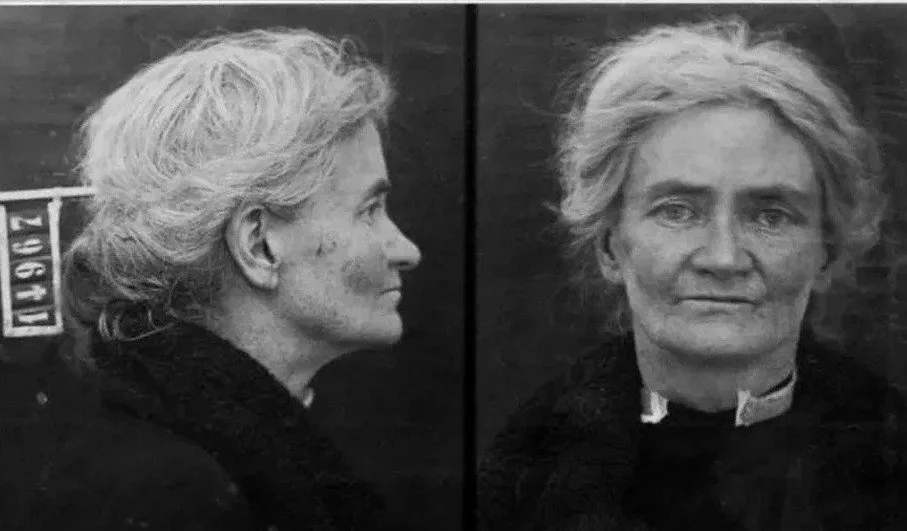
The line between sanity and mental illness is not stark and defined. It is blurry, so it’s not easy to tell when someone has crossed it.
Read MoreOne Hundred Years Ago in Rome
One Hundred Years Ago in Rome
(April 7, 1926)
By Lawrence W. Reed
The line between sanity and mental illness is not stark and defined. It is blurry, so it’s not easy to tell when someone has crossed it. Allow me to tell you about two very real people from the recent past. You decide which one was nuts.
Person A set himself up as a totalitarian dictator. He was ultimately responsible for at least half a million deaths—through war, persecution of minorities, and other repressions. He embraced the lunacy of socialism and called Karl Marx “the greatest of all theorists of socialism.” He cared so little for the individual that he once declared, “All within the State, nothing outside the State, nothing against the State!” He fancied himself as the first among an elite vanguard of natural-born leaders destined to rule over others and kill any who got in his way. He outlawed all political parties but his own. He muzzled the press, claiming “It is the absolute right of the state to supervise the formation of public opinion.” He bombed countries that posed no threat. He was vengeful, insecure, racist, megalomaniacal, narcisisstic, and absurdly claustrophobic.
Person B was not known for a habit of committing violence toward others except for one moment in history. Because she opposed the policies of Person A, she once accosted him in public with a loaded revolver. She fired twice at point-blank range. The first bullet missed but the second wounded him in the nose. Person A was bandaged on the spot and carried on with his planned activities.
Person A was none other than Benito Mussolini, the Italian fascist who plunged his country into war, tyranny, poverty and destruction. Person B was a 50-year-old Irish woman named Violet Gibson. She had suffered a nervous breakdown in 1922 and spent the next two years in a mental hospital. Released in 1924, she then moved to a convent in Italy. On April 7, 1926, in Rome’s Piazza del Campodoglio, she fired at Mussolini. The violent egomaniac Mussolini, his face covered in blood, dismissed it as “a trifle” and assured the mob that “Il Duce” was invincible.
Give the woman some credit for her resourcefulness. She managed to procure a gun despite Mussolini’s ban on private gun ownership.
For years, Violet Gibson had grappled with numerous ailments (including scarlet fever, rubella and pleurisy) as well as the deaths of close loved ones. Those factors undoubtedly affected her mental state. But she did not shoot Mussolini in a mindless rage. She held him responsible for the assassination of a popular rival politician, Giacomo Matteoti, and there’s good reason to believe Mussolini did indeed instigate the murder. She also feared that the fascist was dragging Italy towards disaster. She certainly proved to be right on that!
Mussolini was never certified by any doctor as insane and never spent a day in a mental hospital. But he finally got the end he deserved when he was shot and hung upside down by Italian partisans in April 1945.
After the April 7, 1926, incident in Rome, however, Gibson was deported to Britain where she spent the rest of her days confined—despite many public pleas for her release—in a psychiatric asylum. She died there 30 years later, in May 1956 at the age of 79. In 2022, the Dublin City Council (in Dublin, Ireland) placed a plaque on her nearby childhood home proclaiming her “a committed anti-fascist.” You can watch a trailer for a film about her here:
Think about this: If Violet Gibson had shot Mussolini 15 years later and succeeded, she would likely be celebrated today as a hero.
Who was the more genuine lunatic—Benito Mussolini or Violet Gibson?
For additional information, see:
The Big Problem with the Traditional “Political Spectrum” Taught in Schools by Lawrence W. Reed
Violet Gibson Shot Mussolini by Debbie Foulkes
The Irish Woman Who Shot Mussolini (audio)
Plaque Unveiled for Irish Woman Who Shot Mussolini by the BBC
Another trailer for the Violet Gibson movie
The Irish Woman Who Shot Mussolini by Frances Stonor Saunders
#####
(Lawrence W. Reed is President Emeritus, Humphreys Family Senior Fellow, and Ron Manners Global Ambassador for Liberty at the Foundation for Economic Education in Atlanta, Georgia. He blogs at www.lawrencewreed.com.)