
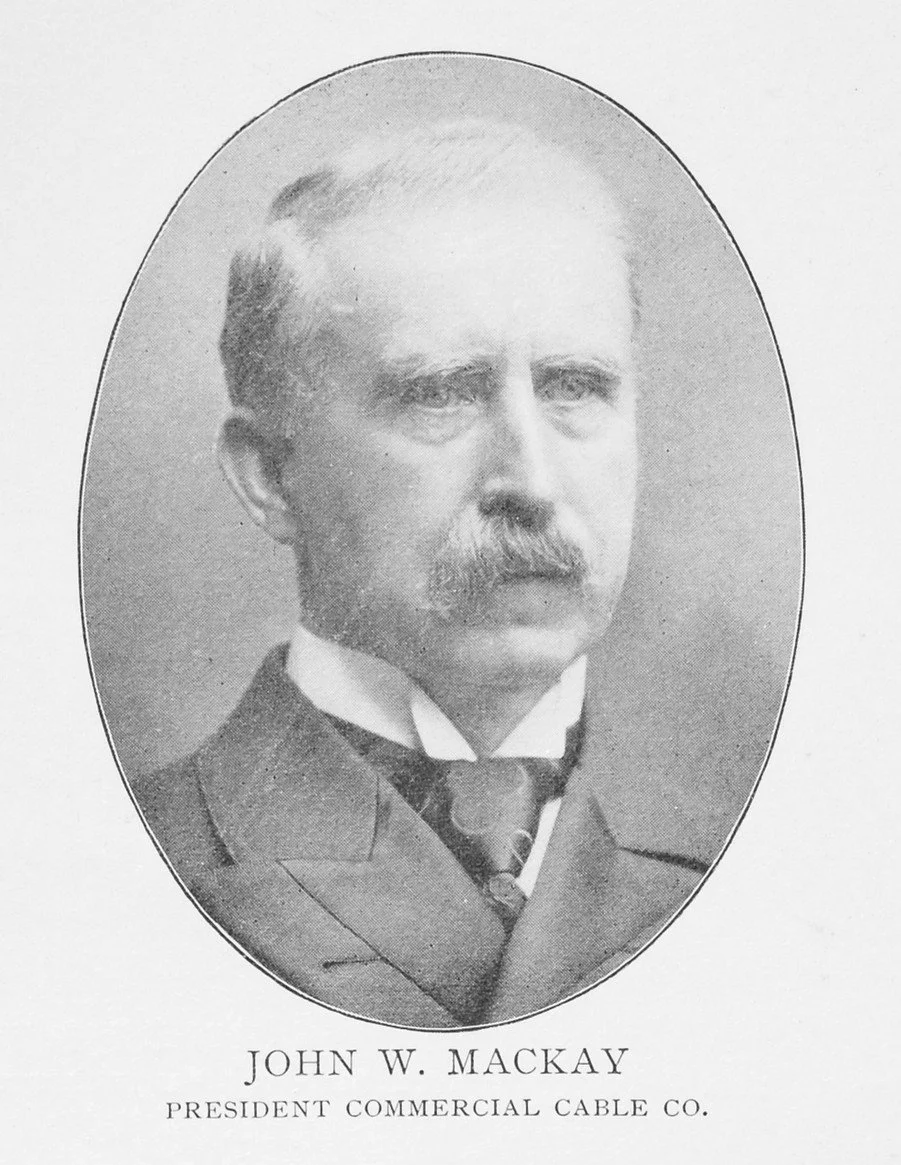
Your teachers and professors undoubtedly taught you “something,” true or not, about the so-called robber barons. Did they ever mention this one?
Read MoreA Robber Baron Who Never Robbed
A Robber Baron Who Never Robbed
By Lawrence W. Reed
In an interview on NBC’s “Meet the Press” last year, Zohran Mamdani (then a candidate, today the mayor of New York City) expressed his deep-seated income bigotry when he declared that billionaires shouldn’t exist.
America has about a thousand billionaires. That’s all. You could seize every penny of wealth they own this year—every asset they possess from cash to stock to property—and run the federal government for as long as a pregnancy. Then next year, you’ll get nothing from any of them.
It’s this dead-end stupidity that once prompted Winston Churchill to remark, “Socialism is the philosophy of failure, the creed of ignorance, and the gospel of envy.”
Ignorance and envy are fundamental to the religion of socialists like Mamdani. They focus on vilifying wealth instead of encouraging it or creating it themselves. Their economic prescriptions are so ludicrous that they constantly require villains to distract the public from the damage they do. Without the “rich” to bash, who would socialists pillory in their place?
Bashing billionaires will cost New York dearly, but it’s an old song. As a young and poor America began to generate great enterprises and fortunes in the 19th century, the knives came out. Of course, some of the rich acquired their wealth in underhanded ways—buying enough legislators to secure taxpayer subsidies or to rig the market for them, for example. But others earned every penny and deprived no one of anything; they created wealth and jobs that didn’t exist before and even gave much of it to needy, deserving people they hardly knew.
By the late 19th century, socialists had invented a catchy term for rich businessmen: robber baron. My good friend, historian Burton (“Burt”) Folsom, wrote a classic on the subject, titled The Myth of the Robber Barons. It set the record straight on John D. Rockefeller, Andrew Carnegie, Charles Schwab, James J. Hill, Andrew Mellon, Cornelius Vanderbilt, and other alleged “Gilded Age” desperados. Folsom’s work is a must-read for anyone interested in the period; I’ve included it in a list of resources below.
I called Burt and suggested he consider adding a chapter in future editions of his book, one on a man I now regard as my favorite robber baron. His name was John W. Mackay. Here’s his remarkable rags-to-riches story, drawn largely from three biographies of him by Gregory Crouch, Oscar Lewis, and Ethel Manter.
“Never heard of him,” you might well say. Niall O’Dowd explains why:
Ironically, the fact that we know so little about him stems from the fact that Mackay was deeply beloved by everyone who met him at a time when the robber barons like Jay Gould and Charles Crocker and their nefarious deeds were much more in the headlines.
Indeed, it would be a challenge even to the most seasoned socialist to demonize John Mackay.
Born in Dublin, Ireland, on November 28, 1831, this tough Irishman experienced desperate poverty first-hand. His family shared a dirt-floor shack with a pig. The family emigrated to the wretched Five Points slum of Manhattan (see Gangs of New York) when John was only nine. Tragedy struck when shortly thereafter, his father died. Young John peddled newspapers and worked as a shipyard laborer to support his mother and sister.
California gold lured John west in 1851 at the age of 19. For seven long years, he panned, picked, and dug to no avail. Penniless, he walked more than a hundred miles to Nevada in 1859 in pursuit of silver. The massive Comstock Lode near Virginia City had just been discovered. Writes historian Oscar Lewis,
It has been called the largest and richest mining strike in history, “the most stupendous treasure trove of precious metals ever to dazzle the eye of man.” One Western editor likened it to Aladdin’s cave; another was sure that if the productions of all the mines of antiquity were gathered together, their total would not equal a normal month’s output of the Comstock.
Mackay’s formal education had been minimal. Using second-hand schoolbooks, he taught himself elementary English grammar in his 20s. An annoying stutter plagued him for years until he largely conquered it by age 30.
Meantime, laboring underground was arduous, hot, and dangerous. Temperatures at a depth of a thousand feet often reached 130 degrees and higher. When former President Ulysses S. Grant took a tour of the mines in 1879, he emerged drenched in sweat. His first words were, “That’s as close to hell as I ever want to get.”
After working five years for a mining firm in Nevada, Mackay ventured out on his own in 1865. He and a few friends bought a claim (the “Kentuck”) that turned into a huge gold find. They invested their earnings into a new dig that yielded the biggest silver deposit ever found in the world. It dwarfed the other mines of the Comstock Lode and was dubbed the “Big Bonanza.”
Mackay’s $4-a-day income of 1860 ballooned to $450,000 per month fifteen years later. He could have retired early and lived comfortably anywhere for the rest of his life. He was 35 but had no intention of resting on his laurels. He started a bank and built a railroad to help miners in the area get water to the desert. When the infamous William Sharon and his cabal of unscrupulous shysters known as the “Bank Ring” attempted to monopolize the precious metals business in Virginia City, Mackay busted them by staging a winning hostile takeover of their operation.
Mackay could now spend more time with his family back east. He even built a second home in Paris, a city his wife liked but which he himself didn’t care much for. His reputation as an honest, hard-working, fair man who never cheated a customer or an employee drew many admirers. “He was entirely without snobbishness,” writes biographer Lewis, “and it irked him that his present great wealth set him apart from friends who had shared the poverty of his beginnings.”
As a devout Irish Catholic, Mackay took his faith seriously. That included a legendary generosity. He rarely missed an opportunity to help someone in genuine distress, but he didn’t do it for fame or attention. He followed the teachings of Jesus in Matthew 6:
Be careful not to practice your righteousness in front of others to be seen by them…When you give to the needy, do not announce it with trumpets, as the hypocrites do in the synagogues and on the streets, to be honored by others…When you give to the needy, do not let your left hand know what your right hand is doing, so that your giving may be in secret. Then your Father, who sees what is done in secret, will reward you.
The one condition on which he insisted as a philanthropist was anonymity. Once, when a reporter uncovered the fact that Mackay was making a monthly donation of $500 to a hospital, the nuns who managed the facility successfully appealed to the reporter’s conscience. Mackay’s donations would stop, they warned, if word of them ever appeared in a newspaper. Similarly, Mackay secretly arranged (and paid for) a Virginia City grocer to give food and provisions to any customer unable to pay when mines closed. He wanted no credit for it, and no publicity.
In San Francisco in 1878, Mackay learned that another guest at the Palace Hotel, an actor named Henry Montague, was sick with tuberculosis. Mackay quietly paid his hotel and doctors’ bills and, after he [Montague] died, shipped his body to his family in the East:
His generosity to the sick actor and the secrecy with which it had been extended were typical. Rich men who made a too ostentatious display of their wealth aroused his scorn, and he often went to extraordinary lengths to avoid anything that would make him personally conspicuous. When newspapers of the middle seventies began referring to him grandly as a “bonanza king,” the title revolted him. “Makes me nothing but a damn millionaire with a swelled head,” he snorted, and urged his acquaintances of the press to avoid such nonsense in the future.
If Mackay had never donated a dollar to anybody, he would still be known as a fine Christian man, a fabulous entrepreneur, and genius wealth builder. But his anonymous generosity, much of it discovered after his death in 1902, is endearing as well. We’ll never know how much he gave away, but in today’s dollars it was likely in the hundreds of millions. Returning again to biographer Oscar Lewis, we learn that late in life Mackay wondered aloud if he might have sometimes done some harm by being so generous:
In the end he was by no means sure that the aid he had passed out so lavishly and in so many directions had not done more harm than good. In the late nineties he confessed: “I want to help people. I like to do it. But when I look back and see the result of trying, I’m ready to swear I’ll never give or lend another friend a dollar. . . . It takes the backbone out of a man to have money given to him.”
Mackey enjoyed a lifetime of excellent health but for two occasions a few months apart in the early 1890s. Appendicitis hit him hard but so did the doctor. Based on the size of the bill, he told a friend that “the doctor must have removed my entire insides.” Then when a failed and disgruntled miner shot him in the back, Mackay refused anesthesia while the doctors probed for the bullet. He recovered and forced the doctors to settle when he challenged their excessive billing.
The story of John Mackay does not end here. In his 50s, as one of the country’s richest men, he ventured forth into an entirely new line of work—the telegraph.
By the late 1870s, Jay Gould’s Western Union dominated telegraphy in the United States and was about to put intense pressure on British and French transatlantic cables by laying cable under the ocean himself. Mackay had made his fortune in precious metals and knew nothing about the telegraph business. But he was smart enough to smell a profit opportunity and eager to do his adopted America a favor by cutting Gould and Western Union down to size. He hired the right people to figure out how to build the business, install wires in America and cables across the vast expanse of the Atlantic, and cut the price of sending telegrams everywhere.
Though Western Union tried to thwart Mackay by cutting its price (hoping to raise it later after putting the competition out of business), Mackay shrewdly turned his own sterling reputation to advantage. His message: “Go with Gould and your low price will soon be a high price. Support me and you’ll always get a low price. You can trust me because of my record and my good name.”
It worked. Investors and customers flocked to Mackay’s Commercial Cable Company. The story is well told in what is easily the very best biography of Mackay, The Bonanza King, by Gregory Crouch, who writes,
Jay Gould might have won a fight of nickels and dimes but in a war of trust, John Mackay’s good name carried the clout of a man with mud-stained boots and callused hands. In a war of trust against such a man, thimble-rigging Jay Gould didn’t stand a chance.
Mackay busted the Western Union monopoly just like he had busted the Bank Ring that tried to corner the Comstock Lode. His telegraph network eventually covered most of the country and, combined with his transatlantic cables, provided the competition that saved telegraph customers a lot of money. When Western Union tried to boost the cost to customers to 50 cents per word, Mackay charged half that and forced Western Union to do the same.
Mackay’s last big venture involved his plan to lay a telegraph cable across the Pacific Ocean to connect San Francisco with Hawaii and the Philippines. Crouch tells us,
A firm believer in the power of private enterprise, Mackay announced that he’d do it without any government “subsidy or guarantee.” Even then, it took more than a year to get government approval and even longer to get the navy to part with its depth soundings of the Pacific. Long before he received formal government approval, Mackay was building 136 miles of undersea cable per month, at tremendous cost. The goal re-energized the old miner, and when Mackay met a friend in May 1902, Mackay put up his fists and sparred a round of shadow boxing, saying that he felt as if he “could handle any 70-year-old fellow in the world.”
Estimates of what Mackay was worth when he died in 1902 vary widely, from hundreds of millions to billions of dollars. That would undoubtedly vex to no end the socialists of the world. Me? I don’t care what he was worth in dollars. Whatever it was, it remains a pittance compared to what he did for the world as a phenomenal creator of value.
Zohran Mamdani and the other losers and levelers who call themselves “democratic socialists” would argue that John W. Mackay should not have existed. If, however, you put Mackay’s accomplishments alongside theirs, you’ll have a good case that the shoe actually belongs on the other foot.
Sources and additional information:
Silver Kings by Oscar Lewis
The Bonanza King: John Mackay and the Battle over the Greatest Riches in the American West by Gregory Crouch
‘The Bonanza King’ Review: The Man Who Hit the Mother Lode by Patrick Cooke
Rocket of the Comstock: The Story of John William Mackay by Ethel Manter
The Businessman Remembered as One of Ireland’s Richest Men by Niall O’Dowd
The Mining Millionaire Americans Couldn’t Help But Love by Gregory Crouch
Witch-Hunting for Robber Barons: The Standard Oil Story by Lawrence W. Reed
Jim Thompson: The Vanishing Entrepreneur by Lawrence W. Reed
The Predatory Price-Cutting Bogeyman by Lawrence W. Reed
James J. Hill: No Subsidies, No Bankruptcy by Lawrence W. Reed
The Myth of the Robber Barons by Burton W. Folsom
How Should We Judge Diamond Jim Brady? by Lawrence W. Reed
Are You For the Rich or For the Poor? by Lawrence W. Reed
Envy is the Root of Many Modern Evils by Lawrence W. Reed
The Quackery of Equality by Lawrence W. Reed
(Lawrence W. Reed is President Emeritus, Humphreys Family Senior Fellow, and Ron Manners Global Ambassador for Liberty at the Foundation for Economic Education in Atlanta, Georgia. He blogs at www.lawrencewreed.com.)