As long as it was, it was largely boring and forgettable.
Read MoreWilliam Henry Harrison: The Speech
William Henry Harrison: The Speech
By Lawrence W. Reed
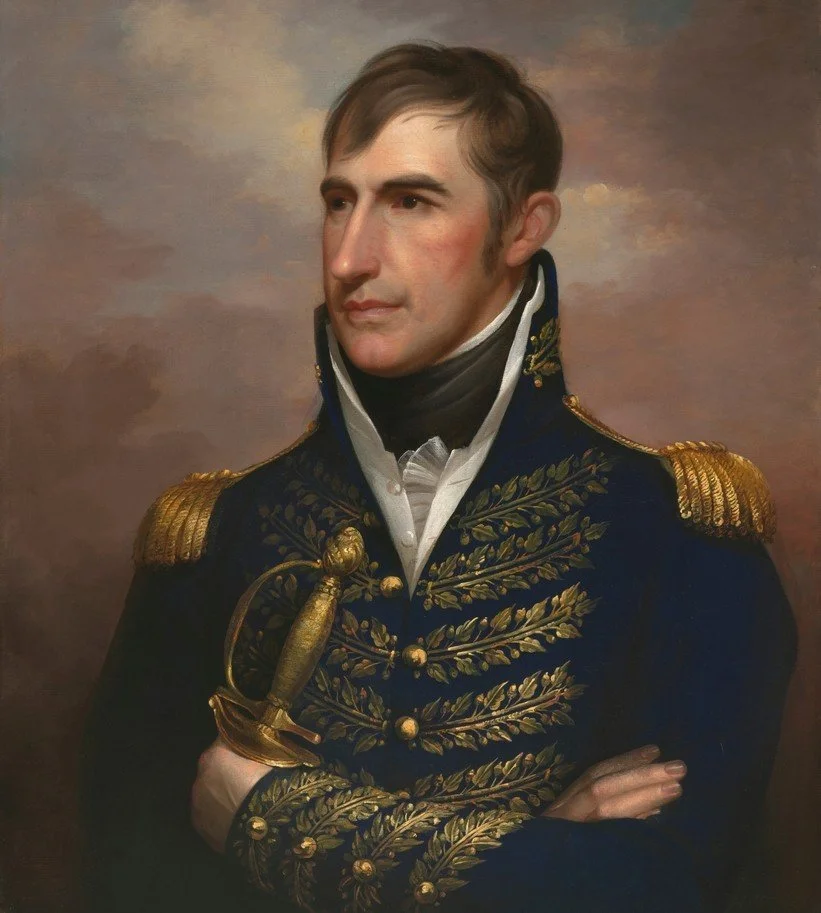
On April 4, 1841, after a mere 31 days in office, America’s 9th President died. He still holds two records in presidential history: He delivered the longest Inaugural Address, and he served the shortest time in the job.
For more than a century, conventional wisdom taught that William Henry Harrison, age 68 at the time of his untimely passing, succumbed to a severe cold or pneumonia. It was further assumed that it was at least partially his own fault because he delivered that nearly two-hour speech in sub-freezing temperatures without a hat.
We now know that Harrison died from enteric fever, likely brought on by a nearby open sewer that contaminated the White House water supply. (See my article, Longest Inaugural, Shortest Presidency).
Though his time in office was too brief to have left much impact, Harrison’s career included notable successes in both private enterprise (horse-breeding) and in government (non-voting representative to Congress from the Northwest Territory, governor of the Indiana Territory, general in the U.S. Army, and a member from Ohio of both the U.S. House of Representatives and the U.S. Senate). He was the first of four Presidents from the Whig Party, an honorable man and patriot but one who embraced the deeply flawed “American System” scheme of fellow Whig Henry Clay.
What about that windy, 8,500-word Inaugural Address—a full 8,350 words longer than the shortest, given in 1793 by George Washington? I decided to find out what Harrison said by reading the speech myself, available online here.
Back in those days, it was customary for formal political speeches to be verbose, but Harrison’s was surely one of the more challenging for any audience to sit through, especially outdoors in the cold. It’s a wonder nobody died from listening to dozens of sentences like this one:
However strong may be my present purpose to realize the expectations of a magnanimous and confiding people, I too well understand the dangerous temptations to which I shall be exposed from the magnitude of the power which it has been the pleasure of the people to commit to my hands not to place my chief confidence upon the aid of that Almighty Power which has hitherto protected me and enabled me to bring to favorable issues other important but still greatly inferior trusts heretofore confided to me by my country.
Harrison would have benefited from advice I got in the form of a funny but pointed barb from a friend and colleague at the Mackinac Center, Jim Kostrava. I was droning on about something when Jim finally interrupted and said, “Larry, you make a lot of good point.” We both laughed, and I’ve tried ever since to say what needs to be said in the fewest possible words.
Being a Whig, Harrison favored a lot more government than any libertarian then or now could stomach—including high tariffs, a central bank, and subsidies for economic development. I expected to find some justifications for such interventions in his Inaugural Address but instead, the speech was as long on platitudes and generalities as it was short on substance. Nevertheless, some of those platitudes and generalities contained genuine wisdom.
For example, Harrison seemed to understand that people who spend too much of their lives in government are not likely to serve either liberty or the people very well. Of the love of power, he declared,
Nothing can be more corrupting, nothing more destructive of all those noble feelings which belong to the character of a devoted republican patriot. When this corrupting passion once takes possession of the human mind, like the love of gold it becomes insatiable. It is the never-dying worm in his bosom, grows with his growth and strengthens with the declining years of its victim. If this is true, it is the part of wisdom for a republic to limit the service of that officer at least to whom she has entrusted the management of her foreign relations, the execution of her laws, and the command of her armies and navies to a period so short as to prevent his forgetting that he is the accountable agent, not the principal; the servant, not the master. Until an amendment of the Constitution can be effected, public opinion may secure the desired object. I give my aid to it by renewing the pledge heretofore given that under no circumstances will I consent to serve a second term.
Lord Acton said it even better (and more succinctly): “Power corrupts. Absolute power corrupts absolutely.”
The president’s veto power is clearly spelled out in the Constitution, but the first eight presidents used it sparingly. Washington vetoed two bills, James Madison nixed seven, James Monroe and Martin Van Buren killed one bill each. John Adams, Thomas Jefferson, and John Quincy Adams never vetoed anything. Andrew Jackson held the record, using the veto 12 times. The Whigs especially resented Jackson’s vetoes because they thought he was acting like a king. When Old Hickory vetoed the rechartering of a central bank, the Whigs went ballistic. So, it was not surprising when Harrison addressed the issue. To his credit, he saw the wisdom of the veto power and said so:
I consider the veto power, therefore given by the Constitution to the Executive of the United States solely as a conservative power, to be used only first, to protect the Constitution from violation; secondly, the people from the effects of hasty legislation where their will has been probably disregarded or not well understood, and, thirdly, to prevent the effects of combinations violative of the rights of minorities.
Harrison didn’t like Jackson’s killing of the government’s Second Bank of the United States and disapproved of Jackson’s placing government deposits elsewhere, namely in various state-chartered financial institutions (some critics called those depositories “pet banks”). He offered a plan to make the Treasury Secretary independent from the President:
It was certainly a great error of the framers of the Constitution not to have made the officer at the head of the Treasury Department entirely independent of the Executive. He should at least have been removable only upon the demand of the popular branch of the Legislature. I have determined never to remove a Secretary of the Treasury without communicating all the circumstances attending such removal to both Houses of Congress.
“Connected with this subject is the character of the currency,” Harrison suggested. Making America’s currency “exclusively metallic,” he argued, “was fraught with more fatal consequences than any other scheme having no relation to the personal rights of the citizens that has ever been devised.”
On the currency question, Harrison was in over his head. America never had an “exclusive metallic” currency. Paper notes had been issued by state and federal governments as well as private banks, insurance companies and other business. People chose to accept or reject paper notes and when those notes were backed by a solid reputation and credible promises to pay in gold on demand, people usually used the paper instead of the metal. Whigs like Harrison, however, were friendlier to “easy money” than the Jacksonian Democrats and expected that their central bank would provide it.
Harrison believed fundamentally that maintaining the spirit of liberty would serve as a bulwark against threats to it, and on that he was right. Whatever our differences and conflicts, he argued that
…[T]he results can be of no vital injury to our institutions if that ardent patriotism, that devoted attachment to liberty, that spirit of moderation and forbearance for which our countrymen were once distinguished, continue to be cherished. If this continues to be the ruling passion of our souls, the weaker feeling of the mistaken enthusiast will be corrected, the Utopian dreams of the scheming politician dissipated, and the complicated intrigues of the demagogue rendered harmless. The spirit of liberty is the sovereign balm for every injury which our institutions may receive. It behooves the people to be most watchful of those to whom they have entrusted power.
He closed his lengthy address by appealing for more moderation, at least in political rhetoric that was polarizing the parties. This was advice as good in his day as it is now in ours:
To me it appears perfectly clear that the interest of that country requires that the violence of the spirit by which those parties are at this time governed must be greatly mitigated, if not entirely extinguished, or consequences will ensue which are appalling to be thought of.
So there you have it—a needlessly long talk that offered no surprises, a few glimpses and very little policy prescriptions. It certainly wasn’t worth dying over. For Harrison’s legacy, it’s better that he died from swamp fever than from the consequences of talking too much in the bitter cold about something he could have delivered with 2/3 fewer words.
Perhaps Harrison’s best gift to the country was his vice president John Tyler, who pursued policies that rejected the worst of William Henry Harrison’s.
For additional information, see:
Full text of Harrison’s Inaugural Address
Longest Inaugural, Shortest Presidency by Lawrence W. Reed
The Most Violent Demonstration at the White House Ever by Lawrence W. Reed
President Willie? by Lawrence W. Reed
#####
(Lawrence W. Reed is President Emeritus, Humphreys Family Senior Fellow and Ron Manners Global Ambassador for Liberty at the Foundation for Economic Education in Atlanta, Georgia. He blogs at www.lawrencewreed.com.)