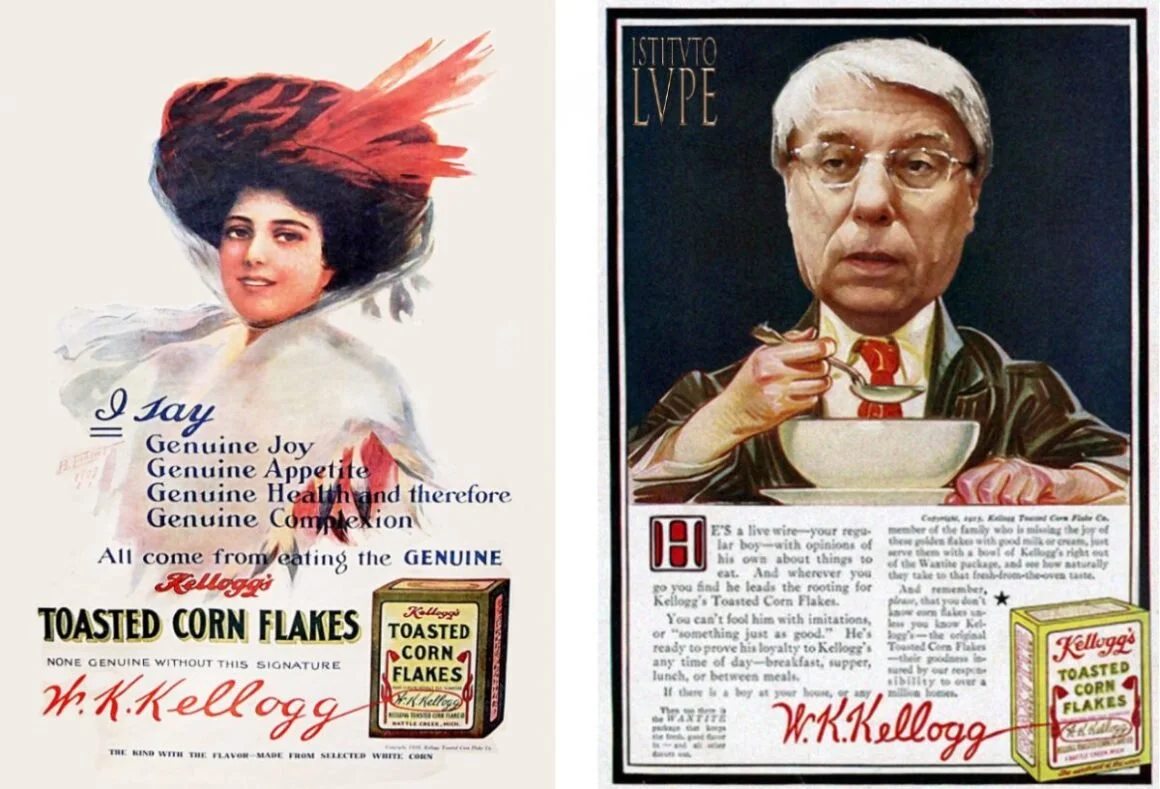
The next time you eat something with the name “Kellogg” on the box, think of what a great country it must be if a man can mix an idea with a few bucks and turn it into a great enterprise. If the class warriors and their political friends have their way, we’ll someday have to go to museums to learn about such things.
Read MoreThe Story of an American Entrepreneur: Will Kellogg
The Kellogg Story
By Lawrence W. Reed
In the summer of 1907, New Yorkers were astonished, and breakfast habits were forever altered, by an advertising campaign cooked up in the small town of Battle Creek, Michigan. The campaign’s catchy slogan was “Wednesday is Wink Day in New York.”
Daring and even risqué for its day, the campaign promised each housewife in the city a free box of corn flakes if only she would go to a grocery store, look the grocer in the eye, and then wink at him—but only on Wednesdays.
The man behind this effort had a last name that would soon become a household word--Will Kellogg. Skeptics had advised him that his newfangled food idea would never catch on unless he could conquer the big New York market. His clever campaign worked, and within about a year, he was shipping thirty train carloads of Kellogg’s Corn Flakes to the Big Apple every month.
Before his success, Will Kellogg seemed unlikely to become one of the wealthiest Americans of the century. He had dropped out of school at the age of 13. One of his teachers called him “dim-witted.” While still in his teens, he failed at selling brooms and wouldn’t attempt a business venture again for 30 years. In the interim, Will worked for $25 a week at the Battle Creek sanitarium of his brother John Harvey, known as “J.H.” His most exciting tasks included chasing down the insane when they escaped.
Sometimes, Will assisted in food preparation. He helped develop a moist and tasty breakfast treat made from wheat dough pressed into large sheets and cut into square servings. One fateful night, he accidentally left the dough sit uncovered and found that by morning, it had dried out. When he ran a rolling pin over it, it “flaked up.” Instead of throwing the flakes away, he decided to put them in bowls and serve them. The patients loved the crunchy stuff and demanded more.
Suddenly, a light went on in Will’s head. He started a mail order business to supply patients with cereal after they went home. In 1896, the first full year of sales outside the sanitarium, he sold 113,400 pounds.
Will then ran into a stone wall. His brother was opposed to getting into the mass marketing of cereal. And when Will had the audacity to add sugar to the flakes, J. H. hit the roof. In 1906 at the age of 46, the man who was known as “J.H.’s flunky” finally became his own boss and went into business for himself. Within two decades, he became one of America’s twenty wealthiest individuals.
Historian Burton W. Folsom (author of The Myth of the Robber Barons and New Deal or Raw Deal) writes,
Will Kellogg’s boldness in advertising and his calm leadership were just the beginning. He promoted new products, such as Rice Krispies and All Bran; his research team worked to improve the crunch and the quality of corn flakes; and he improved his packaging and advertising to the point where Kellogg outdistanced all of his competitors. He changed breakfast habits around the nation, and his name became a household word. His electric billboards lit up New York City. Corn flakes were munched the world over.
The next time you eat something with the name “Kellogg” on the box, think of what a great country it must be if a man can mix an idea with a few bucks and turn it into a great enterprise. If the class warriors and their political friends have their way, we’ll someday have to go to museums to learn about such things.