
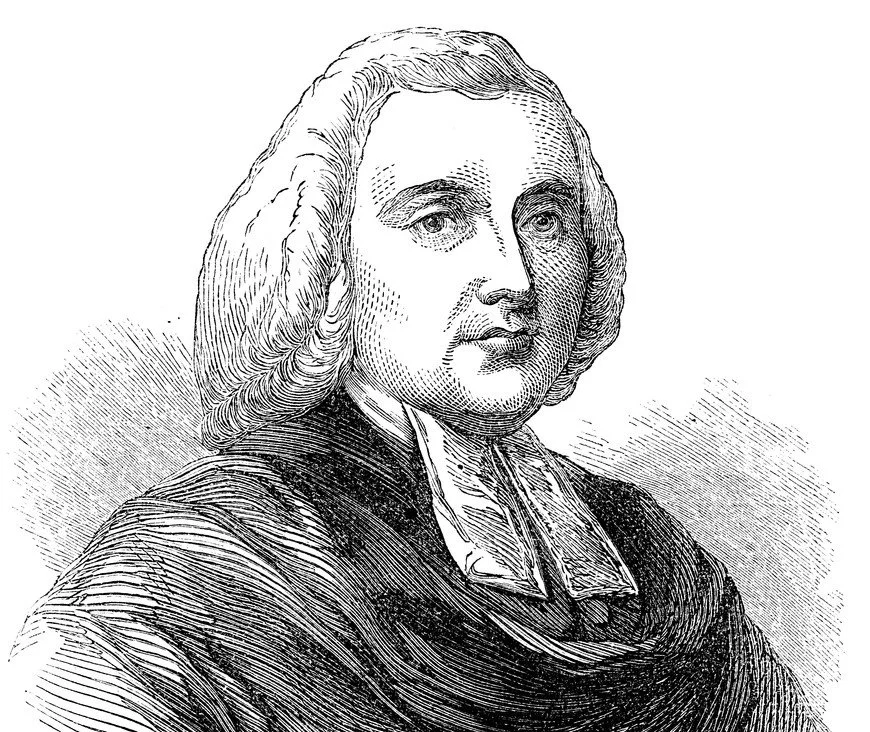
Hundreds of colonial pastors and priests supported the Revolution from their pulpits, spurred their congregations to take up arms against the British, and served as chaplains in George Washington’s Continental Army. Were they wrong? (Pictured: Rev. Jonathan Mayhew, 1720-1796).
Read MoreRev. Jonathan Mayhew
Does Romans 13 Negate the Legitimacy of the American Revolution?
Does Romans 13 Negate the Legitimacy of the American Revolution?
By Lawrence W. Reed
Does Chapter 13 of the New Testament Book of Romans command obedience to all governments at all times? If the answer is yes, then even the American Revolution would be judged an illegitimate rebellion from a Christian perspective. Yet, we know that hundreds of colonial pastors and priests supported the Revolution from their pulpits, spurred their congregations to take up arms against the British, and served as chaplains in George Washington’s Continental Army.
One named John Witherspoon proudly signed the Declaration of Independence.
The passage in question, Romans 13:1-3, reads as follows:
Let everyone be subject to the governing authorities, for there is no authority except that which God has established. The authorities that exist have been established by God. Consequently, whoever rebels against the authority is rebelling against what God has instituted, and those who do so will bring judgment on themselves. For rulers hold no terror for those who do right, but for those who do wrong.
Those verses seem to leave no wiggle room for lawbreakers. But what about their author, the Apostle Paul? Drawing the anger of both secular and religious authorities, he was arrested no less than three times for preaching the Gospel. After each arrest, he went right back to doing the very thing that got him in trouble. One might argue that he was a hypocrite, a disobedient subject demanding the obedience of others.
In seeming contradiction to Romans 13, many other passages in the Old and New Testaments report civil disobedience and laud both the illicit deeds and their perpetrators.
The three wise men were told by King Herod to report back to him as to the whereabouts of the baby Jesus. They disobeyed and never returned. The King then ordered the “massacre of the innocents,” a command to midwives and local authorities to kill newborn Hebrew boys. Many, including the mother of Jesus, Mary, disobeyed to their eternal credit.
Like Paul, the other apostles of Jesus defied the governing authorities repeatedly. When they were ordered to stop preaching, Peter and John replied, “Judge for yourselves whether it is right in God’s sight to listen to you rather than God. For we cannot stop speaking about what we have seen and heard” (Acts 4:19-20). Later, they famously declared, “We must obey God rather than men” (Acts 5:29). They clearly prioritized divine commands over human prohibitions.
Nothing—I repeat, nothing—any human authority could do or threaten to do would have ever prompted Jesus Christ himself to abandon his work.
The Old Testament woman named Rahab, a Canaanite prostitute, broke the law by hiding two scouts sent by Joshua to spy on Jericho before his successful assault on the city. She is praised for this in the New Testament.
Ehud was sent by the Israelites to pay their (coerced) tribute to the Moabite King Eglon but instead, Ehud assassinated him, thereby liberating his people from the king’s rule.
The Persian ruler Darius issued a decree forbidding anyone from praying to any god or man except himself for 30 days, under penalty of death. Daniel, putting God’s law before a man’s law, defied him repeatedly and was thrown into a lions’ den for it. He was divinely saved from a grisly death and known ever since as a great prophet of the faith.
After the Babylonian King Nebuchadnezzar ordered everyone to worship a statue of gold, he threw Shadrach, Meshach, and Abednego into a fiery furnace for refusing to do so. God negated the King’s decree by saving all three men.
Furthermore, it is notable that while people of the early Christian church did not use violence to depose the Roman occupiers, they did not support Rome either. When the law or custom conflicted with their faith, they routinely declined to obey or participate, putting their lives in danger. Some died rather than submit.
Clearly, a proper reading of Romans 13 must involve context and consistency with other biblical passages. The best one-stop shop for such information is the Libertarian Christian Institute’s website and its Romans 13 Reference Page. A piece there by Laurence Vance asserts:
Any admonition in Scripture to obey the government is tempered by the command to ‘obey God rather than men’ (Acts 5:29) and the sixth commandment ‘Thou shalt not kill’ (Exodus 20:13), which is repeated in Romans 13:9. Obeying the government is not absolute when the government commands something that is contrary to the word of God.
In regard to the American Revolution, John Cobin, in an article titled Can Starting a Revolution be a Good Thing? writes,
King George III was an overbearing thief and a depriver of civil liberties. Since the colonists had the power to resist, they were rightly exhorted to do so—especially considering the implications of 1 Corinthians 7:21-24. For some of us, no further justification is needed to attack a wayward, tyrannical, and predatory state beyond the fact that is plundering us or depriving us of our liberties. Like a robber or other criminal, the state can be opposed when it is prudent and possible to do so. Other willing Christian insurgents, however, need further validation. For instance, many preachers and theologians in the 1770s proclaimed that Romans 13:1-7 and 1 Peter 2:13-17 were only binding insofar as government honors its “moral and religious” obligations. Otherwise, the duty of submission was nullified. Indeed, rulers had no authority from God to do mischief; it was blasphemous to call tyrants and oppressors the ministers of God. And each individual was left to decide when a ruler crossed the line. In the final analysis, using either of these methods to justify civil disobedience leads to the conclusion that state tyranny can be properly resisted by Christians. Indeed, Christians are remiss who do not oppose tyrants.
A quarter-century before the Declaration of Independence—indeed, even a decade before George III ascended the British throne—the Reverend Jonathan Mayhew settled the issue in the minds of many American colonists. If and when Britain should attempt to tyrannize the colonies, the Boston pastor warned, the people could rightfully exercise a duty to resist. He made those views known in a powerful sermon in January 1750, one which John Adams would later note was “read by everybody” from New England to the deep South. It was titled, A Discourse Concerning Unlimited Submission and Non-Resistance to the Higher Powers.
Mayhew interpreted the Apostle Paul’s admonition in Romans 13 as presupposing that the rulers Christians are to obey are, in fact, good leaders who are carrying out their proper functions to protect individual rights to life and property and administer justice:
If those who bear the title of civil rulers do not perform the duty of civil rulers but act directly counter to the sole end and design of their office; if they injure and oppress their subjects, instead of defending their rights and doing them good; they have not the least pretense to be honored, obeyed, and rewarded, according to the apostle’s argument…Common tyrants and public oppressors are not entitled to obedience from their subjects by virtue of anything here laid down by the inspired apostle.
The Bible teaches that children should obey their parents. As general advice, that’s very good advice. But, as Mayhew imagines, such obedience is forfeited if parents were to come at their children with knives, intending to slit their throats. No Christian—indeed, no one of sound mind or morals, could claim that the children should meekly submit when parents morph into violent oppressors.
Five hundred years before Mayhew, the revered 13th century Italian theologian, Thomas Aquinas, argued similarly. He acknowledged that civil government per se is a legitimate authority when it performs its proper defensive functions but loses that legitimacy when it becomes an instrument of wrong. When it commands a sinful or immoral act, for example, “there is no obligation to obey the authority.” Aquinas took it a step further, arguing that in such a situation, “one is obliged to disobey it, as did the holy martyrs who suffered death rather than obey the impious commands of tyrants.”
Christianity does not tell us to roll over for despots. It does not advise complicity or obsequiousness in the face of evil. It does not suggest that might makes right when it wears a crown or a badge.
The many pastors of the Revolutionary era who urged disobedience to British tyranny were in the right. I as a free American citizen 250 years later am happy that they understood the full context, meaning, and implications of Romans 13.
As the old hymn declares, “Onward, Christian soldiers!”
Sources and Additional Information:
Father of Liberty: Jonathan Mayhew and the Principles of the American Revolution by J. Patrick Mullins
They Preached Liberty by Franklin P. Cole
Should Christians Always Submit to the Government? by Jonathan Mayhew (Stephen A. Flick, editor)
Concerning Unlimited Submission and Non-Resistance to the Higher Powers by Jonathan Mayhew (Google Books)
But What About Romans 13? by various authors, Libertarian Christian Institute
Is the Bible “Pro-Government?” by Michael Maharrey
Should the Founders Have Submitted to Government More? by John Cobin
Can Starting a Revolution be a Good Thing? by John Cobin
The First of Several Posts on Romans 13 by Robert Murphy
Romans 13 and Obeying the Government by Laurence Vance
Rebellion to Tyrants: The Sermon that Sparked the Revolution (video)
Was Jesus a Socialist? by Lawrence W. Reed
Born of Ideas: How Principles, Faith, and Courage Forged America by Lawrence W. Reed
#####
(Lawrence W. Reed is President Emeritus, Humphreys Family Senior Fellow, and Ron Manners Global Ambassador for Liberty at the Foundation for Economic Education in Atlanta, Georgia. His website is www.lawrencewreed.com and his forthcoming book, Born of Ideas: How Principles, Faith, and Courage Forged America, is available for pre-order now on Amazon.)