
When it came to the conduct of America’s war against the world’s pre-eminent military power, Congress got one big thing right. It involved the navy and what today we would call privatization.
Read MoreAmerica's Private "Pirates"
America’s Private “Pirates”
By Lawrence W. Reed
From May 1775 until March 1781, the Second Continental Congress served as America’s national legislature. In the wake of the shots fired at Lexington and Concord in April 1775, it was the body that began the formation of a Continental Army and quickly named George Washington of Virginia as its commander-in-chief.
Fourteen months after its inception, the Congress issued the Declaration of Independence. It chose the country’s formal name (at Thomas Paine’s suggestion) as the United States of America. It supervised the conduct of the war with Great Britain and ratified the Articles of Confederation that would create a new Congress in its place in 1781.
It was also the same Congress that often could not pay the troops. Without the power to tax, its revenues consisted of what it could beg or borrow from the states or foreign powers. It printed unbacked paper money (the continental dollar) until it became worthless before the end of the war. Its members often meddled in details that exasperated Washington, and which, to the general’s credit, he found ways to get around when necessary.
But when it came to the conduct of America’s war against the world’s pre-eminent military power, Congress got one big thing right. It involved the navy and what today we would call privatization.
In 1776, the Continental Navy possessed a grand total of 27 ships. By the end of the war, only 20 remained. Contrast those numbers with those of Britain, which boasted 250 ships in 1776 and about 500 seven years later. If you’re outnumbered by as much as 20 to 1, what do you do?
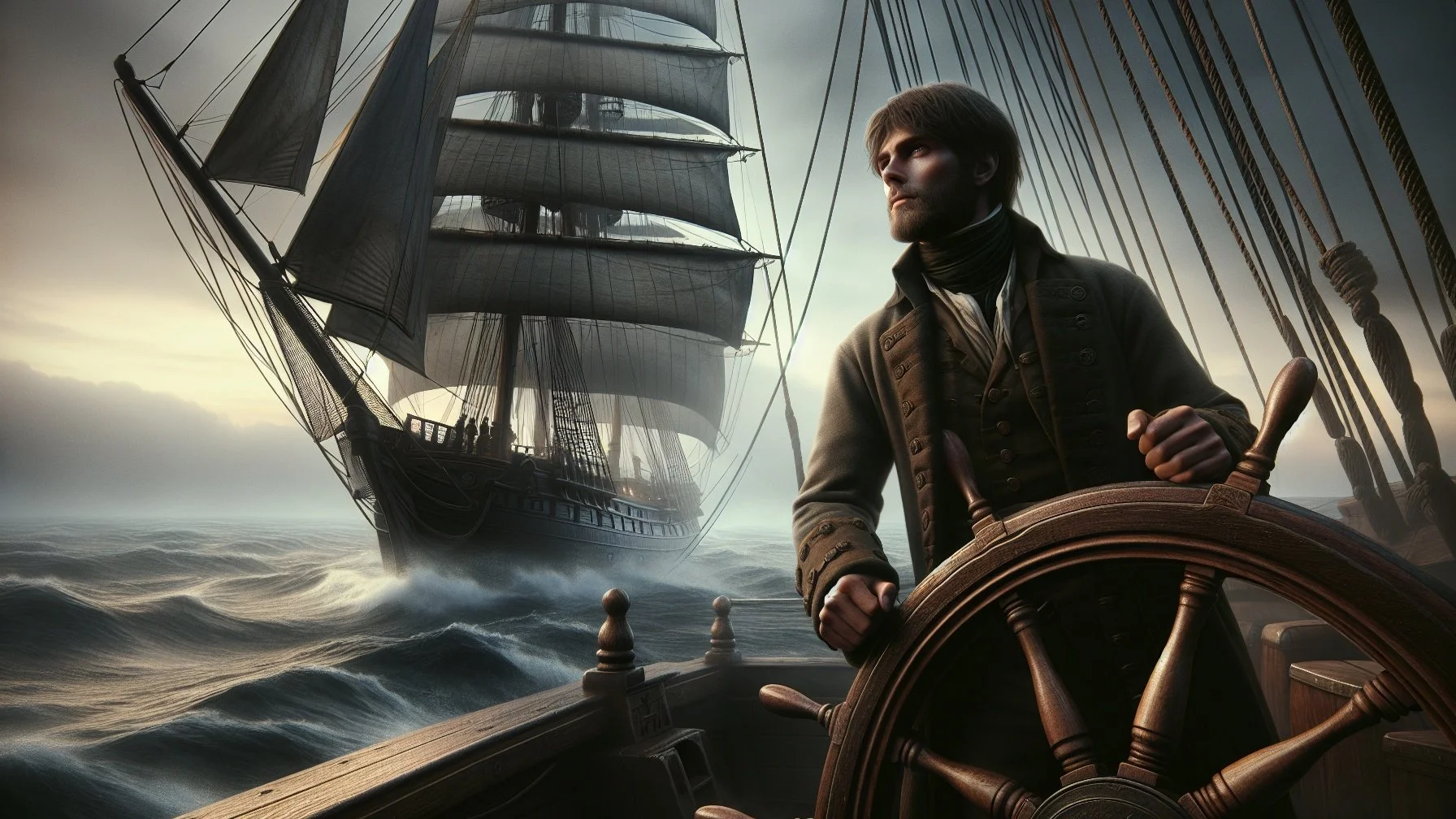
Fourteen weeks before the Declaration of Independence, Congress began to get its act together, at least in terms of the navy. Faced with the painfully obvious—a pittance of a fleet and no money or time to build one—it turned to the private sector. It authorized what the British likely disdained as “private pirates” but which Americans would call “privateers.” They were private individuals who, with “letters of marque” issued by the Congress, could use their own privately-owned vessels of all sizes to blast away at the mother country’s ships. Under the Articles of Confederation, Congress had no power to tax; rather, it expected that keeping the proceeds of ship and cargo seizures would be all the incentive a privateer needed.
This wasn’t a haphazard venture. Congress formalized a process of commissioning the vessels. Uniform rules of conduct were set up. The vessel owners were required to post bonds to guarantee proper conduct on the high seas. The owners and their crew members were to be paid not by congressional appropriation, but from the proceeds of the sale of a captured vessel and its cargo. Pre-arranged contracts stipulated how those proceeds would be distributed amongst the privateer and his crew members.
For the privateers, the best outcome of a battle was a disabled enemy ship and/or the surrender of its crew. If the vessel was sunk, privateers received pay if the ship and cargo were salvageable. Only on rare occasions were they awarded anything just for the effort.
So were these incentives and arrangements sufficient for Congress to generate a navy? Historian John Frayler tells us,
Although the documentation is incomplete, about 1,700 Letters of Marque, issued on a per-voyage basis, were granted during the American Revolution. Nearly 800 vessels were commissioned as privateers and are credited with capturing or destroying about 600 British ships.
Vessels of every size and description were pressed into service as privateers. At the upper end of the scale was the 600-ton, 26-gun ship Caesar of Boston. At the other end was the 8-ton boat Defense of Falmouth, Massachusetts. Crews ranged from a few men in a whaleboat to more than 200 aboard a large, fully equipped privateer.
How can a 27-ship navy compete with a 250-ship one? Privatize! That’s what Congress wisely did, and it worked surprisingly well. By seizing or destroying hundreds of British ships, privateers made chaos of enemy supply lines, imposed a great deal of economic damage on King George’s royal fleet, and helped turn British public opinion against the war.
Even Benjamin Franklin involved himself in the mischief; while in Paris to negotiate French entry into the war, he gleefully issued many letters of marque to Irish privateers whom he knew would be glad to give the Brits hell.
Privateering was far from a swashbuckling adventure, however. Thousands of crew members lost their lives in battle or drowned in the sea, or died in British prison ships, according to historian Christopher Klein.
Critics derided the motives of privateers, claiming they were in it less for patriotism than “for the money.” That undoubtedly defined a few, but the war effort nonetheless benefited from the pursuit of their self-interest. Devotion to the young nation’s ideals of liberty and independence described many others who frequently and voluntarily contributed a portion of their prizes to the patriot cause. In Rebels at Sea: Privateering in the American Revolution, Eric Jay Dolin writes,
The patriotism evinced by the owners of the privateers Chance and Congress, who gladly provided Congress with more than $22,000 in desperately needed silver and gold coins in exchange for much less dependable Continental bills, was replicated by other owners who poured money into Congress’s much-depleted coffers. Newburyport’s Nathaniel Tracy, who owned 47 privateers, which captured 120 British prizes in total, donated $167,000 to the army and other public purposes.
History books generally stress the importance of the French Navy in winning American independence. To be sure, it was considerable. At Yorktown in 1781, it was pivotal. But at its height, it numbered about a hundred ships, just one-eighth the number in America’s privatized navy.
Yet another reason to think of privatization as a way to get a job done, and save some money at the same time.
Sources and Additional Information:
Privateers in the American Revolution by John Frayler
Untold War at Sea: America’s Revolutionary Privateers (video) by Kylie Hulbert; book by the same title
American Privateers of the Revolutionary War by Angus Konstam
Rebels at Sea: Privateering in the American Revolution by Eric Jay Dolin
Patriot Pirates: The Privateer War for Freedom and Fortune in the American Revolution by Robert H. Patton
The American Privateers by Donald Barr Chidsey
A History of American Privateers by Edgar Stanton Maclay
Privateers of the American Revolution: War on the New Jersey Coast, 1775-1783 by Donald Grady Shomette
How a Rogue Navy of Private Ships Helped Win the American Revolution by Christopher Klein
(Lawrence W. Reed is President Emeritus, Humphreys Family Senior Fellow, and Ron Manners Global Ambassador for Liberty at the Foundation for Economic Education in Atlanta, Georgia. He blogs at www.lawrencewreed.com. Permission to reprint with appropriate credit to the author, in whole or in part, is hereby granted.