
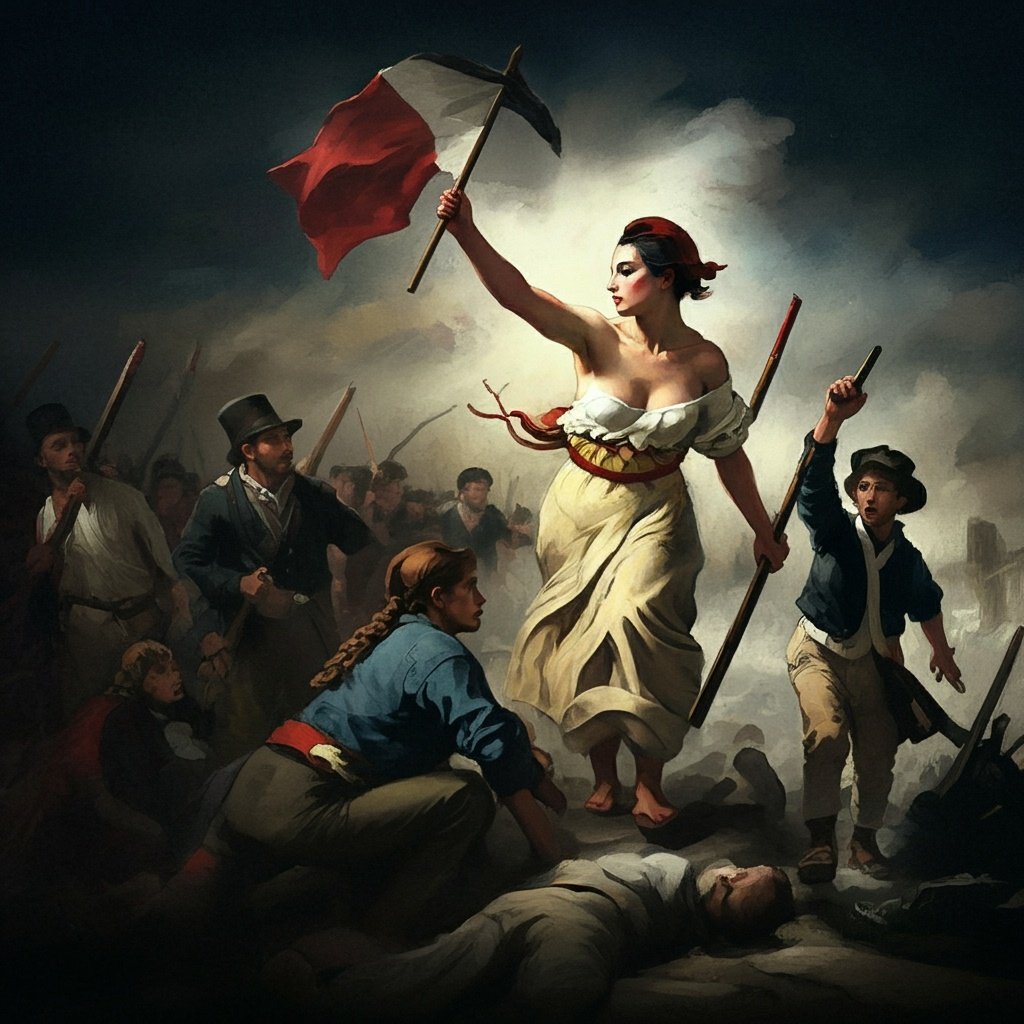
Rousseau was a collectivist who dreamed of homogenizing individuals in a communal blender, thereby sacrificing their uniqueness for the sake of the “common good.”
Read MoreLocke or Rousseau: America vs France
Locke or Rousseau: America vs France
By Lawrence W. Reed
Of the various reasons why the American Revolution succeeded and the French Revolution failed, philosophy is a big one.
America’s Founders drew inspiration from John Locke, cited him frequently, and embodied his key ideas in the Declaration of Independence. Those included the right of the individual to think and live for himself in voluntary association with others, limiting government to the protection of the individual, especially his natural right to life and property. He viewed men as a mixture of good and evil, the latter to be restrained by a combination of personal virtue and reasonable public rules (government). Locke endorsed equality before the law but not economic equality at the point of a gun. A very important component of freedom was the right to peacefully accumulate property through production and trade.
French Revolutionaries looked to Jean-Jacques Rousseau for their inspiration. He saw mankind as perfectible if only the institutions that corrupted him could be destroyed. He opposed private property and favored economic equality, to be achieved by seizures and government force. He denigrated individuality and postulated an abstract “general will” as the legitimate voice of the people. He was a collectivist who dreamed of homogenizing individuals in a communal blender, thereby sacrificing their uniqueness for the sake of the “common good.” For obvious reasons, he would be admired by many socialists and communists of later decades.
With the collectivism of Rousseau, fuzzy theory clashes with brutal reality over these fundamental issues: Just exactly what is the “general will” and how is it determined? Who gets to decide what “the common good” is? Can the concentration of power in the name of “the people” be anything but coercive, arbitrary, and corrupting? The French Revolution answered that last question emphatically in the negative.
For more on the contrasts between the American and French Revolutions, see my article, Revolutions Worlds Apart: Why Americans Chose Liberty and the French Chose Terror.
For information on the hyperinflation during the French Revolution, see my article, Dusting Off an Old but Important Story.
Sources and Additional Information:
Edmund Burke: Eloquence and Conviction by Lawrence W. Reed
Edmund Burke’s Little-Known Speech That Eroded the British Monarchy by Lawrence W. Reed
They Lost Their Heads for Power by Lawrence W. Reed
Francois Noel-Babeuf: The Marxist Before Marx by Lawrence W. Reed
Olympe de Gouges, Hero of the French Revolution by Lawrence W. Reed
The French vs the American Revolution: Why One Turned to Tyranny by Thomas Harmon
The American Revolution vs the French Revolution (video) by Joe Loconte
#####
(Lawrence W. Reed is President Emeritus, Humphreys Family Senior Fellow, and Ron Manners Global Ambassador for Liberty at the Foundation for Economic Education in Atlanta, Georgia. He blogs at www.lawrencewreed.com.)