
I doubt there’s a soul on the planet who never had an ancestor who was victimized by somebody, but that’s no reason to find the victim’s innocent living descendants and make them pay for it.
Read MoreBritain Should Spurn the Reparations Panhandlers
Britain Should Spurn the Reparations Seekers
By Lawrence W. Reed
This week, a delegation from Great Britain’s former Caribbean colonies (Jamaica, Barbados, Grenada, Bahamas, etc.) plans to present King Charles III in London with a petition for slavery reparations.
The King should spurn this shameless grab for cash and refuse to see the panhandling windbags. Moreover, he ought to send them packing with a symbolic invoice for Britain’s cost of battling the transatlantic slave trade in the 19th century.
No civilized people should ever do violence to justice by taking money from guiltless people and giving it to others who were never wronged by them. I doubt there’s a soul on the planet who never had an ancestor who was victimized by somebody, but that’s no reason to find the victim’s innocent living descendants and make them pay for it.
Slavery, as I’ve pointed out elsewhere, was ubiquitous and largely unquestioned for centuries—a sad commentary on the sinful nature of many people of countless colors and nationalities. Complicit in the transatlantic slave trade when the British dominated it (the 17th and 18th centuries) were black Africans themselves, who first kidnapped fellow blacks and then transported them in chains to dockside where they sold them to the British, the Portuguese, the French, and others. Perhaps the reparations delegation should visit Benin, Senegal, Morocco, Nigeria, Cameroon, Angola, and all the other nations of Africa that were up to their eyeballs in the slavery business. They should include in their itinerary the African country of Mauretania, which didn’t get around to abolishing slavery until 1981.
Have we forgotten that the greatest humanitarian campaign in history was the British anti-slavery effort, led by William Wilberforce and Thomas Clarkson?
In the modern era, the first country to abolish slavery was Haiti, and that wasn’t until 1804. Britain abolished trade in slaves three years later, and slavery itself in 1833 (completed by decade’s end). It cost the Brits so much to buy the freedom of slaves that it took them another 178 years to pay off the debt incurred to do it.
Never did one nation take it upon itself to crush the slave trade of other nations—until Great Britain took on the challenge. In 1808, within a year of its slave trade ban, London formed the West African Squadron, a fleet whose sole purpose was to patrol the African coast and shut down the dirty business. By 1860, this one squadron alone had commandeered about 1,600 slave ships and freed 150,000 slaves.
In the House of Commons on July 16, 1844, a distinguished gentleman rose to address the issue. He declared,
I will venture to say, that if all the other crimes which the human race has committed, from the creation down to the present day, were added together in one vast aggregate, they would scarcely equal, I am sure they could not exceed, the amount of guilt which has been incurred by mankind, in connection with this diabolical Slave Trade. And is it not, then, the duty of every government, and of every nation on whom Providence has bestowed the means of putting an end to this crime, to employ those means to the greatest possible extent?
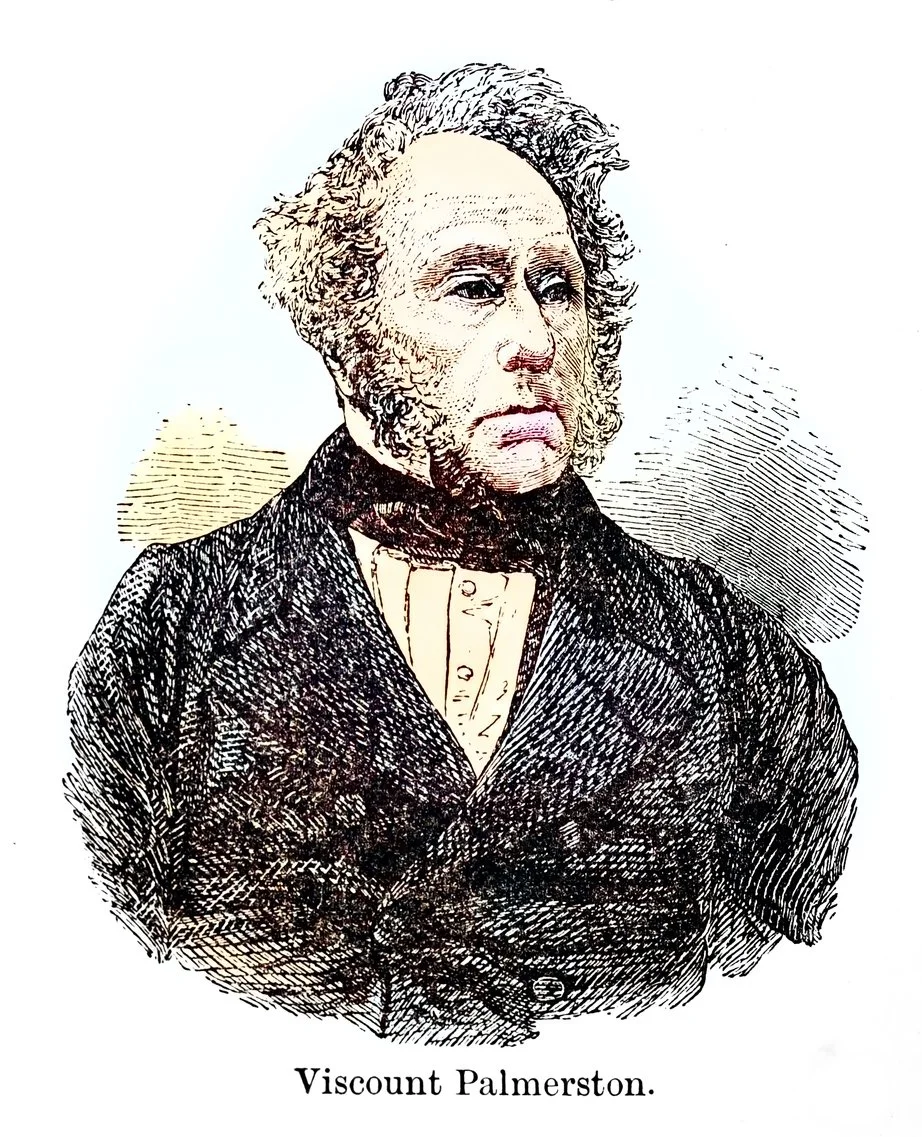
Those were the words of Henry John Temple, better known as Lord Palmerston. He dominated British foreign policy for more than three decades as Foreign Minister and Prime Minister. From those lofty posts, he championed the country’s campaign to wipe out the slave trade.
In 1850, Palmerston dispatched warships to ports in Brazil, where they virtually wiped out the Brazilian slave fleet. That action was pivotal in the overall effort because Brazil was the recipient of nearly half (almost five million) of all slaves coming out of Africa, mostly on Portuguese vessels. Less than 10 percent of Africans destined for slavery on the other side of the Atlantic, incidentally, ended up in America. Brazil finally abolished slavery itself in 1888, making it the last country in the Americas to do so.
The 1997 film Amistad depicted a thrilling moment in that effort, the Royal Navy’s bombardment of a slave fortress in Sierra Leone in 1849. Here’s the clip.
For decades in the 19th century, the Royal Navy was the scourge of the slave trade, but it was no cheap endeavor. It cost millions of pounds and the lives of 17,000 British sailors. Writes Andreas Koureas, “[W]e should not forget that it was under the Union Jack that slavery was challenged globally for the first time in history.”
Most Americans are probably just as tired as most Brits of being blamed for the sins of the world while getting little more than a perfunctory nod for the great blessings we’ve bequeathed. When the panhandlers come to London in a few days, I hope the King will give them an education instead of a check.
#####
(Lawrence W. Reed, author of Born of Ideas: How Principles, Faith, and Courage Forged America, is president emeritus of the Foundation for Economic Education in Atlanta, Georgia.)
For additional information, see:
Britain’s Remarkable Fight to End the Slave Trade by Andreas Koureas
HMS Protector Honours Sailors Who Helped End the Slave Trade by the Royal Navy
The Brazilian Slave Trade Collapses by the Bluejackets Society
Lord Palmerston: Architect of Victorian Diplomacy (video)
The Historical Facts the Slave Reparations Lobby Doesn’t Want You to Hear by Robert Tombs
Inconvenient Truths About Slavery by Lawrence W. Reed
The British Empire’s Role in Ending Slavery Worldwide by Ellen Castelow
Why the British Paid Millions to End Slavery by Tree Langdon
Britain’s Abolitionism is Unique by Robert Tombs
Two Heroes of Conscience Who Changed the World by Lawrence W. Reed