

What if Rhode Island had never ratified the Constitution, thereby never joining the Union and evolving as a tiny nation of its own?
Read MoreAlmost a Nation
Almost a Nation
By Lawrence W. Reed
Twice in one of the best movies of 2026, A Great Awakening, Benjamin Franklin refers to the smallest of American states as “Rogue Island.” It was a sentiment shared by the leading Federalists of the late 1780s for two reasons: 1) Rhode Island’s legislature refused to participate in the Constitutional Convention of 1787 and 2) The same legislature voted at least seven times to reject the Constitution until it finally ratified it in May 1790, two years after it took effect in other states.
This raises an interesting “What If?” What if Rhode Island had never ratified the Constitution, thereby never joining the Union and evolving as a tiny nation of its own?
The state’s leaders raised doubts about the Constitution, some of which carried merit while others did not. On the one hand, Quakers in the state (who were significant in numbers and influence) objected to the document allowing the slave trade for another 20 years. Also, they and many other Christians didn’t think that protections for religious liberty went far enough. Anti-Federalists in Rhode Island expressed legitimate concerns about potential abuse of the federal taxing power; they also argued that the two-year terms for House members and six-year terms for Senators were too long. On the other hand, the Rhode Island legislature didn’t like the Constitution’s prohibition of state-issued, fiat-paper money. (See the links to articles and a video below.)
Little Rhode Island as a full-fledged, independent country? Sounds inconceivable today, but it was briefly a possibility back then. Before you dismiss the idea because it’s such a small place, consider this:
In square miles, Rhode Island is notably larger than about 30 sovereign nations. For example: the Ocean State is twice the size of Mauritius; five times bigger than Singapore; eight times larger than Andorra; 24 times the size of Liechtenstein; 63 times bigger than San Marino; and a whopping 8,800 times the size of Vatican City. In terms of population, the state boasts about the same numbers as Mauritius, and many times more than the other countries cited here, except for Singapore (six million compared to Rhode Island’s one million+).
In some ways, size doesn’t matter when it comes to nations. The world’s smallest are among the freest and best governed (see suggested readings below).
The thought of Rhode Island as a country of its own assumes that the adjacent United States would have left it alone. That, unfortunately, was highly unlikely. Indeed, on May 18, 1790, the U.S. Senate voted to enact a complete embargo on all trade with Rhode Island until it ratified the Constitution. Eleven days later, when it seemed likely that the House would support the Senate, the legislature in Providence narrowly voted to ratify. Author Jessie Kratz writes,
Still hoping to limit federal power, the state attached a list of 18 human rights and 21 amendments with its ratification, requesting a ban on poll taxes, the draft, the importation of slaves, and curiously, for Congress not to “interfere with any one of the States in the redemption of paper money.”
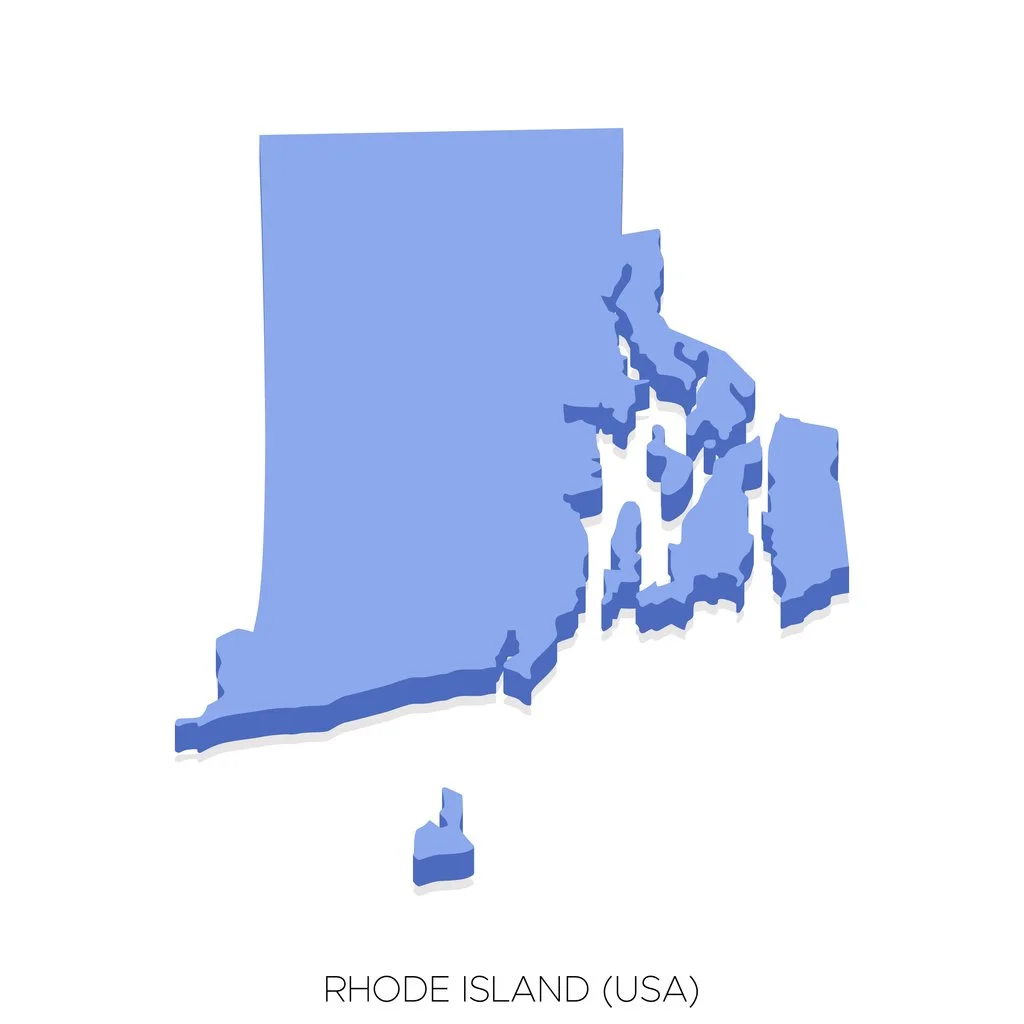
The fact is that Rhode Island was bullied into the Union. Whether you think that was a good thing or a bad thing, there’s no way around it.
Sooner or later, one way or another, Rhode Island would likely have joined the Union even if Congress had done nothing in 1790. Within a few years, its objections to the Constitution were mostly moot. Congress voted in 1807 to abolish the slave trade. It refrained from establishing, subsidizing or interfering with any church, voiding Rhode Island’s concerns about religious freedom. Congress did not impose conscription until the 1860s and in the 1960s, poll taxes were forbidden nationwide. If Rhode Island as a nation wanted to print fiat paper money, it likely would have produced a flight of people and capital to other states, where more reliable gold and silver formed the monetary system; the advantages of blending into a hard money system rather than inflating your own would have been powerfully evident in short order. The need for defense against foreign aggression might also have goaded the state to get itself under the federal umbrella.
It never hurts to speculate but I think my “What If” question is rather far-fetched. For what it’s worth, though, I think the threat of federal coercion broke with at least the spirit of the liberty that Americans had fought for just a decade before.
I’m glad that Rhode Island doesn’t hold a grudge against the rest of us.
For additional information, see:
Andorra, a Gorgeous Micro-State That’s Free by Lawrence W. Reed
Liechtenstein, a Tiny Country that Almost Bought Alaska by Lawrence W. Reed
San Marino: The World’s Oldest Republic by Lawrence W. Reed
On Constitution Day, Celebrate the Anti-Federalists by Lawrence W. Reed
Defending the Constitution by Lawrence W. Reed
Reading the Articles of Confederation by Lawrence W. Reed
Real Heroes of the American Revolution (video) by Lawrence W. Reed
Rogue Island: The Last State to Ratify the Constitution by Jessie Kratz
Rhode Island’s Fight Against Joining the United States (video)
(Lawrence W. Reed is President Emeritus, Humphreys Family Senior Fellow, and Ron Manners Global Ambassador for Liberty at the Foundation for Economic Education in Atlanta, Georgia.)