
The U.S. never threatened or bullied Denmark before it peacefully purchased the Danish West Indies more than a century ago.
Read MoreWhen America Bought Land From Denmark
When America Bought Land from Denmark
By Lawrence W. Reed
President Trump wants Greenland, enough to repeatedly bully a friend and ally to let America have it, one way or the other.
The thought of the United States military being deployed to seize it from Denmark is, in my view, unthinkable. Far better it would be for the island, by multi-party agreement, to be partitioned peaceably.
Greenlanders seem to favor independence. Denmark says if they want it, they can have it. So, if Greenlanders vote for it, why not allow the southern quarter of the island—from the Arctic Circle south—to become a sovereign country and, at the same time, let the U.S. buy the rest if a good national security case can be made for it? The new nation with its capital in Nuuk would immediately encompass virtually the entire island’s population of 56,000. Part of the deal could be a free trade pact so that Greenlanders and Americans could buy and sell with each other completely tariff-free.
I’m just thinking out loud as I stare at a map. I have no idea if this notion has been considered or if it’s politically viable, especially after 14 months of Trump roiling the icy waters with threatening rhetoric.
There is ample precedent, of course, for the U.S. buying land from other countries. The Jefferson administration doubled the size of the United States in 1803 with the Louisiana Purchase. We bought Alaska from the Russians in 1867. We even have a precedent of peaceably buying land from Denmark itself.
On this very date—January 17—in 1917, the American government officially acquired the Danish West Indies in the Caribbean for the equivalent of about 650 million in today’s dollars (as per the agreement, we paid Denmark in gold coin). That’s an easy date to remember, by the way: 1/17/17.
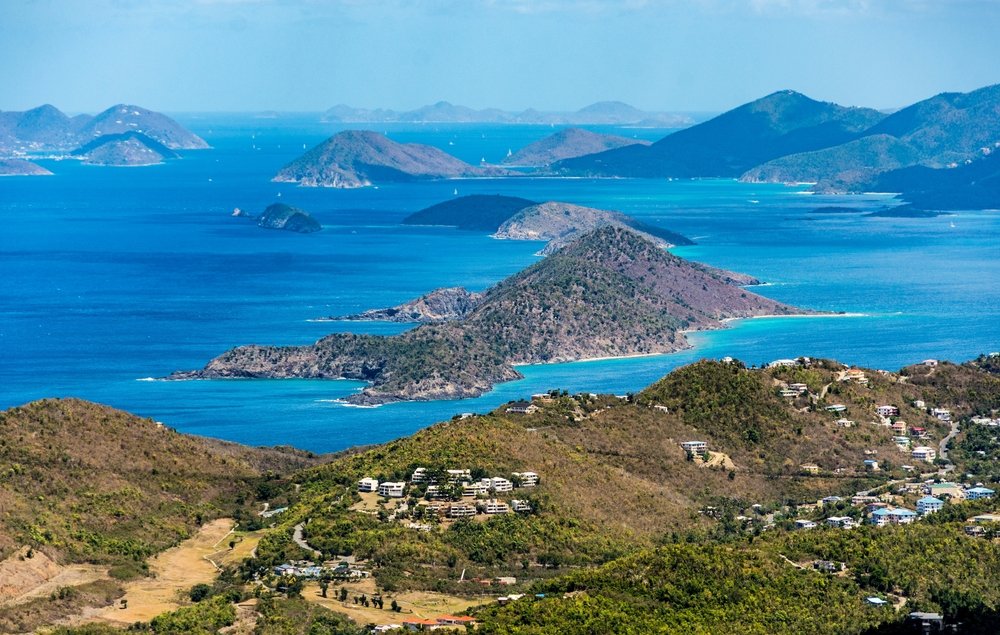
We now call them the U.S. Virgin Islands—an American territory consisting of Saint Thomas, Saint Croix, Saint John and dozens of additional outcroppings. Thirty-three thousand people lived there at the time of the sale; about 105,000 live there today. They send one delegate to the United States Congress who can engage in debate but cannot vote on bills. The territory’s capital is the town of Charlotte Amalie on the island of St. Thomas.
Discussions between the U.S. and Denmark about the status of the islands first began in the late 1860s, but it was World War I that finally led to a sale.
America didn’t threaten or pressure Denmark, but officials in Washington were concerned that the Germans might grab the islands and turn them into a base for submarines. For Danes, the islands were a financial drain they were happy to relinquish. By referendum, Danish citizens approved the sale in December 1916 by a landslide (64%).
On January 17, 1917, the two parent countries exchanged their respective treaty ratifications and the transfer occurred in late March. Danes and Americans have been good friends ever since and NATO allies since 1949.
Maybe Denmark would have sold the islands to the U.S. sooner or later and under almost any circumstances (they are a long way from Copenhagen), but the sale in 1917 remains an example of friends talking to friends in a spirit of mutual respect. It was a peaceful win-win for everybody.
Maybe it’s not too late for something comparable to happen with regard to Greenland.
#####
(Lawrence W. Reed is President Emeritus, Humphreys Family Senior Fellow, and Ron Manners Global Ambassador for Liberty at the Foundation for Economic Education in Atlanta, Georgia. He blogs at www.lawrencewreed.com.)