
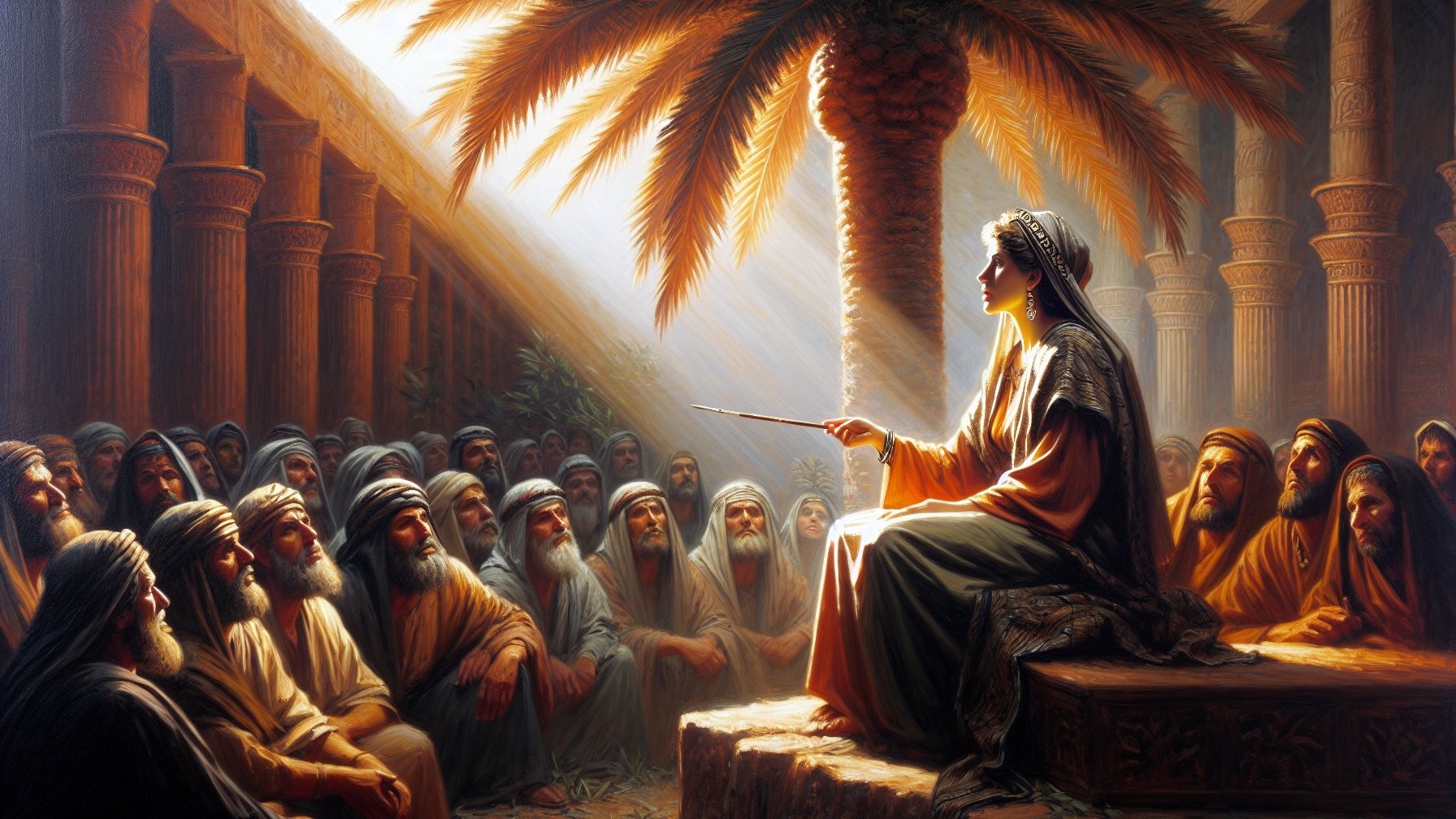
Margaret Thatcher famously said once, “If you want something said, ask a man. If you want something done, ask a woman.” That was certainly the case in the ancient story of the great Israelite leader, Deborah.
Read MoreA Woman as Strong as Any Man
A Woman as Strong as Any Man
By Lawrence W. Reed
Strength is an attribute typically associated with men, at least the physical kind. But strength can be manifested in personal character too, and there are endless examples of both men and women who possessed it.
A person of strong character, man or woman, exhibits honesty, firmness of purpose, and courage. He or she is principled—they stand for something, so they don’t fall for anything. They know right from wrong and do their best on behalf of the right. They say what they mean and they mean what they say. They are not afraid to speak truth to power.
Women of strong character deserve as much attention as their male counterparts, and I for one have always enjoyed writing about some of them: Margaret Thatcher, Vivien Kellems, Marie Curie, Martha Coston, Hetty Green, Anne Hutchinson, Dorothy Thompson, Mercy Otis Warren, Harriet Tubman, Nellie Bly, Madam C. J. Walker, Katharine Atholl, Bessie Coleman, Fanny Crosby, Althea Gibson, Harriet Quimby, Prudence Crandall, Ella Knowles Haskell, Anne Frank, the Grimké Sisters, the many women of the British abolitionist movement, and more.
Here’s the story of another woman, about whom I have not written until now. Her name was Deborah, and she lived more than 30 centuries ago.
For almost 350 years (1398-1052 BC), the ancient Israelites were governed by judges—as many as 19 by one reckoning. The first of them, Joshua, was named by Moses to lead the people to the Promised Land. The last of the judges were the two sons of the prophet (and former judge) Samuel, who famously warned the Israelites against installing a king (see I Samuel 8). The period of the judges ended with the first Israelite king, Saul, who assumed the throne in 1052 BC. The people came to regret that they didn’t heed Samuel’s warning.
As you might guess, it is in the Book of Judges in the Old Testament of the Bible that we learn about these 19 leaders. Deborah was the only woman among them. She served as a judge (and a prophet) for 60 years (1204-1144 BC), 20 of which occurred while the Israelites were oppressed by the Canaanite King Jabin and his top military man, General Sisera. Her story is revealed in Chapters 4 and 5 of the Book of Judges (Samuel is believed to be the book’s principal if not sole author), in which she is depicted as a woman of great wisdom, faith, and courage. Seated under the “Palm Trees of Deborah,” she routinely settled disputes among the Israelites, who came to respect her fairness and discernment.
“Like John the Baptist,” writes an author for The Digital Bible, “Deborah was a voice calling Israel back to faithfulness and action in a period of turmoil and oppression, urging them to follow God’s ways.”
Deborah’s greatest claim to fame involves her role in a climactic battle. According to the story Samuel tells, God told Deborah to summon the Israelite military leader named Barak. She delivered God’s message, instructing Barak when and where to assault the Canaanite forces. That was a tall order, for it was believed that Jabin’s army included a huge force of 900 chariots.
Barak’s spine needed a little stiffening. As Samuel tells it, Barak told Deborah he would only carry out the order if Deborah herself accompanied him. She did not hesitate to agree, and her presence served as a great inspiration to the underdog Israelite army. She also told Barak that together, they would be victorious but the price he would pay for his demand would be that the glory of the win would go to a woman. Her prophecy proved correct. The Canaanite army was decimated and its leader, Sisera, was killed when a woman named Jael drove a spike through his head while he slept.
Four years ago, archeologists from the University of North Carolina uncovered ancient mosaics depicting both heroines, Deborah and Jael (see link below).
Judges 5 is comprised of the “Song of Deborah” that Deborah and Barak sung in the battle’s aftermath. Poetic and triumphant, it praises God for his intervention, rebukes the Israelite tribes who lacked the courage to join in the fight, provides detail regarding the death of the enemy general, and heralds the forty years of peace that would follow the Canaanite defeat. More than 3,000 years after she lived, Deborah is still honored by men and women of Jewish and Christian faiths for the example she set.
Other strong women from biblical days include Ruth, Esther, Abigail, and Priscilla. So, Deborah was by no means the only notable woman who left a legacy of inspirational character. To her credit, long before anyone had heard of the fabled “glass ceiling,” Deborah broke through it.
After Deborah’s tenure, the next judge was Gideon. He had a tough act to follow, but he acquitted himself well by defeating a Midianite army many times the size of his. The “Gideon Bibles” you’ve seen in hotel rooms get their name from him. For that fascinating story, see my essay, A Giant Project that Began in Montana.
Margaret Thatcher famously said once, “If you want something said, ask a man. If you want something done, ask a woman.” That was certainly the case in the ancient story of the great Israelite leader, Deborah.
For additional information, see:
Sisera v Deborah: Evidence for the Biblical Account by Christopher Eames
The Entire Story of Deborah: The Prophetess Who Commanded Armies (video)
Earliest Known Images of Two Biblical Heroines Unearthed in Israel by Lucia Cheng in Smithsonian magazine
Biblical Sites: 3 Discoveries at Hazor by Bible Archeology Report
(Lawrence W. Reed is President Emeritus, Humphreys Family Senior Fellow, and Ron Manners Global Ambassador for Liberty at the Foundation for Economic Education in Atlanta, Georgia. His ninth book, Born of Ideas: How Principles, Faith, and Courage Forged America, will appear in May 2026.)