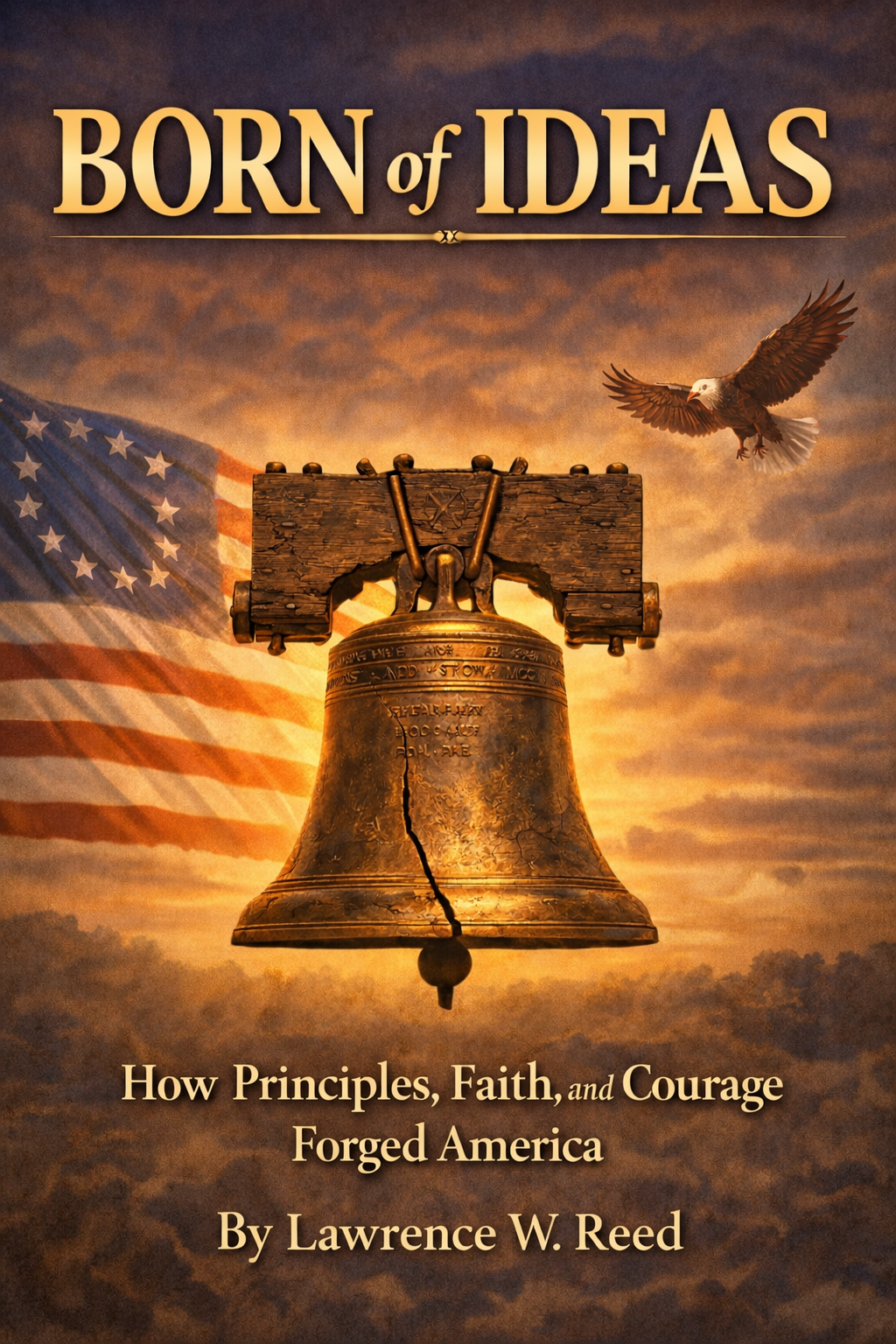
From January 1 until July 4, 1776, the world spoke of America as 13 colonies in open rebellion against Great Britain. From July 4 onward, we were called the United States of America. To pre-order Born of Ideas, click here: https://tinyurl.com/7hebjdhf.
Read MoreWhy North Carolina is Called "First in Freedom"
Why North Carolina is Called “First in Freedom”
By Lawrence W. Reed
For the cause of liberty and independence, the first half of the fateful year of 1776 produced no shortage of critical events.
On New Year’s Day, Britain’s Royal Navy began shelling the city of Norfolk, Virginia. Patriot forces responded by burning the property of Loyalists. Within three days, most of Norfolk lay in ashes but the retreating British were effectively denied any further use of their last remaining stronghold in Virginia.
A week later, the publication of Thomas Paine’s fiery pamphlet, Common Sense, proved to be the printed equivalent of “the shot heard ‘round the world” at Lexington the previous April. Separation from the mother country turned from quiet whispers to an open and burgeoning rebellion.
In the opening days of March 1776, as Georgia and South Carolina militia units beat the British in the Battle of the Rice Boats in Savannah, Patriot naval forces staged a daring raid on Nassau in the British-held Bahamas. They briefly seized two forts and then made off with large stores of arms and gunpowder that would be indispensable in battles to come.
On March 4, the bookseller-turned-chief-of-artillery for George Washington’s Continental Army, Henry Knox, seized Dorchester Heights. With Patriot cannon aimed down upon them, the British evacuated Boston.
But of all the events in the critical half-year before the Declaration of Independence, I count one from North Carolina as the most consequential. It occurred on April 12, 1776, in the town of Halifax, where 83 delegates in the colony’s Provincial Congress were meeting.
Today, the state of North Carolina offers three standard license plates for the owners of vehicles. One design includes the motto, “First in Flight” to commemorate the Wright Brothers’ 1903 airplane experiment at Kitty Hawk. Another states “In God We Trust.” The third declares “First in Freedom,” which harkens back to what those delegates at Halifax did in April 1776.
Convened shortly after the battles of Lexington and Concord, the Second Continental Congress had been meeting in Philadelphia since May 1775. For months, its members discussed how to navigate the tensions with the mother country. Though some clearly favored the treasonous step of a full rupture in the connection to Britain, none of the delegations had been formally instructed by their colonial legislatures to support such a move.
That changed in Halifax when North Carolina’s Provincial Congress passed the bold “Halifax Resolves” on April 12. By unanimous vote, those 83 delegates approved a statement condemning British “wrongs and usurpations” waged against colonial rights and liberty. It concluded thusly:
Resolved that the delegates for this Colony in the Continental Congress be impowered to concur with the other delegates of the other Colonies in declaring Independency, and forming foreign Alliances, resolving to this Colony the Sole, and Exclusive right of forming a Constitution and Laws for this Colony, and of appointing delegates from time to time (under the direction of a general Representation thereof to meet the delegates of the other Colonies for such purposes as shall be hereafter pointed out).
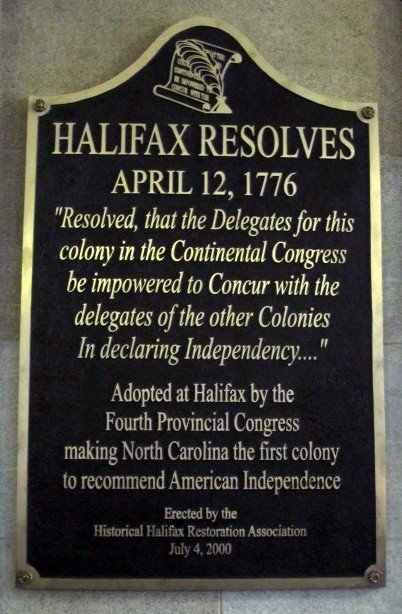
The resolution was nothing less than the first official action in the colonies calling for independence from Britain. It spurred other colonial legislatures to do the same, so that by the summer, delegates to the Second Continental Congress could vote to declare independence if their consciences so dictated. The Halifax Resolves thereby set the stage for the Declaration of Independence on the 4th of July.
From January 1 until July 4, 1776, the world spoke of America as 13 colonies in open rebellion against Great Britain. From July 4 onward, we were called the United States of America. The vote in Halifax, North Carolina, on April 12 helped mightily to make that happen.
For additional information, see:
Thomas Paine and the American Spirit by Lawrence W. Reed
The Halifax Resolves from NCpedia
North Carolina’s Revolutionary Founders, Jeff Broadwater and Troy L. Kickler, editors
Troy Kickler on the Halifax Resolves (video): https://www.youtube.com/watch?v=8yfSxPj7zvw.
#####
(Lawrence W. Reed is President Emeritus, Humphreys Family Senior Fellow, and Ron Manners Global Ambassador for Liberty at the Foundation for Economic Education in Atlanta, Georgia. His forthcoming book to be published by Grove City College’s Faith & Freedom Press, titled Born of Ideas: How Principles, Faith & Courage Forged America will appear in June 2026.