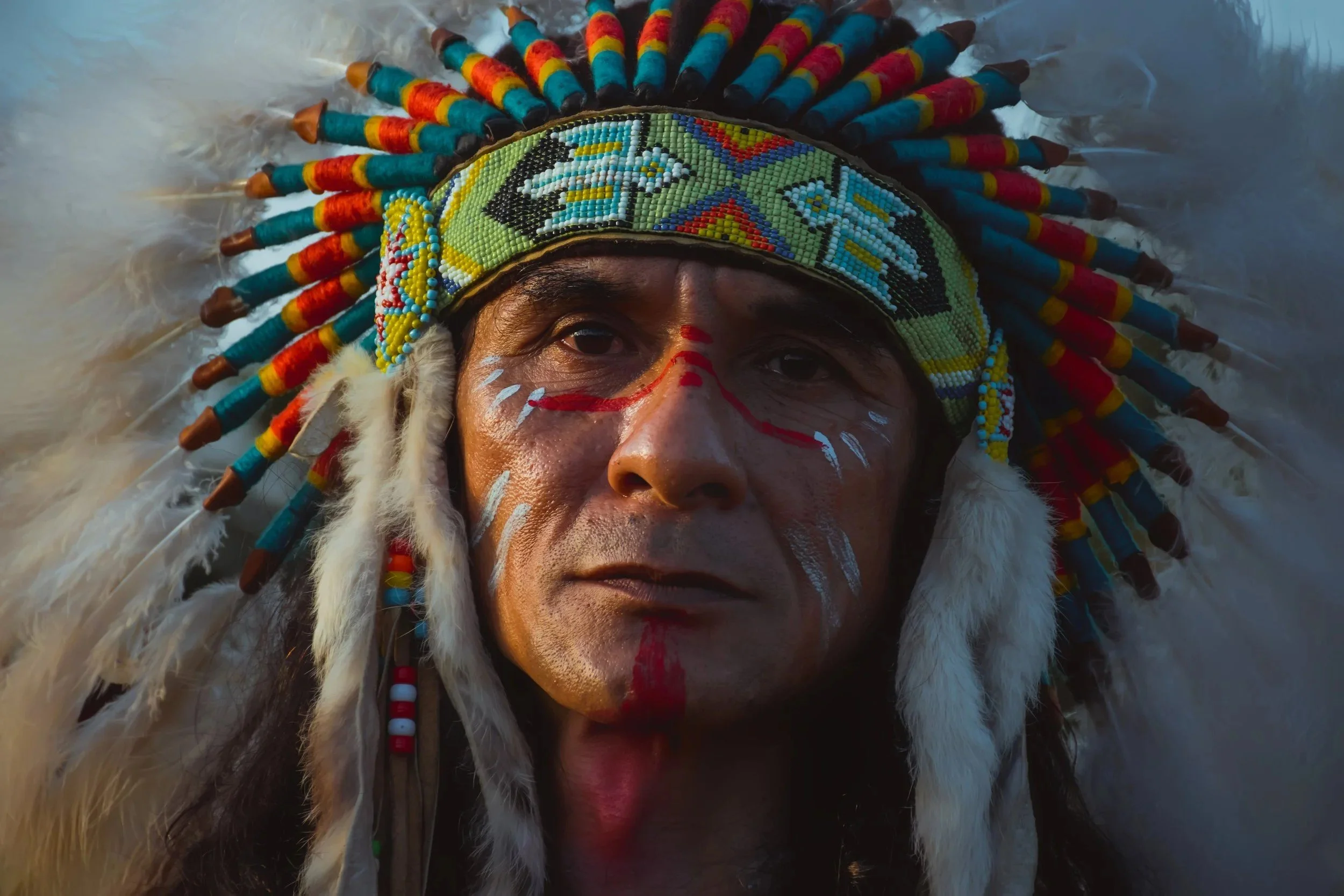
Most Native Americans were not bystanders as patriots fought British soldiers and Hessian mercenaries.
Read MoreNative Americans and the Revolution
Native Americans and the American Revolution
(Note: The following is drawn from a chapter in the author’s latest book, titled Born of Ideas: How Principles, Faith, and Courage Forged America, available on Amazon.)
Heroes come in all colors. During America’s war with Britain, Native Americans could be found on both sides, but the ones who joined the patriot cause brought more than just color to the battlefield.
New Hampshire was home to the Pennacook and Abenaki. The Creek and the Cherokee claimed much of Georgia. Across all thirteen colonies in the 1770s, thirty tribes of Native Americans lived alongside—and sometimes in conflict with—both the British and the American colonists. Even when they preferred to be passive observers, the Revolutionary War often drew them in on one side or the other.
The outbreak of the War for Independence put Native Americans in a tough spot. Many tribes had traded with both the British and the colonists. A few remained neutral at the conflict’s start but, in the end, more opted to support the British than the Americans. Since a royal proclamation in 1763, London had forbidden the colonists from expanding westward beyond the Appalachians, and most Native Americans wanted to keep it that way. Many also had developed better relationships with the British than the patriots, and they thought that the British were more likely to win the war.
The six nations of the powerful Iroquois Confederacy split over the issue. There were many individual exceptions but generally, the Mohawks, Onondagas, Cayugas, and Senecas joined the British while the Oneida and Tuscarora tribes supported American independence. In response to George Washington’s request on Christmas Eve 1776, the Passamaquoddy and Penobscot tribes in what is now Maine sent 600 warriors to join the Continental Army. In the South, the Cherokees and the Creeks fought mostly with Britain.
Some notable Native Americans stand out among those who supported the American cause. One is Joseph Louis Cook, the son of a black father and a Native American mother from the Abenaki tribe. Adopted as a child by the Mohawks, he became fluent in their language, as well as in English and French. He fought with the Americans at Quebec in 1775 and Saratoga in 1777 and became a colonel and the highest-ranking Native American in the Continental Army. A ferocious warrior, Cook also had a gentler side. Near General Washington’s Valley Forge encampment in May 1778, he was heard singing French opera in the woods. No doubt some Native American stereotypes evaporated among Anglo Americans that day.
A member of the Catawba tribe, Peter Harris enlisted with the state militias of both Georgia and South Carolina. Even after suffering serious shrapnel wounds at Stono Ferry in June 1777, he fought with the Americans in several more battles. In recognition of his contributions, the South Carolina legislature granted him 200 acres of land in 1794 and a belated pension in 1822.
A father-son team from the Wappinger tribe, Daniel and Abraham Nimham, gained prominence in the lower Hudson Valley for their valiant efforts on behalf of America. They both served at Valley Forge with Washington and later with the Marquis de Lafayette.
As previously mentioned, the Oneida Nation of upstate New York was an American ally in the war. Fifty Oneida warriors camped with Washington’s men at Valley Forge in the awful winter of 1777-1778, and an Oneida woman named Polly Cooper cooked meals for Washington at the camp. Quite a few Oneida men assisted the Continental Army as scouts, and others fought courageously in battle.
The most impressive Oneida might have been a husband-wife team. His name was Han Yerry Tewahangaraghkan (“He Who Takes Up the Snowshoe”) and hers was Tyonajanegen (“Two Kettles Together”). At the Battle of Oriskany near Saratoga in August 1777, Han Yerry killed at least nine British soldiers. After his hand was wounded, his wife loaded his gun while he aimed and fired. A few months later, he was a dinner guest at George Washington’s table.
Most Native Americans were not bystanders as patriots fought British soldiers and Hessian mercenaries. Geography, trade, ideology, perceptions of benefits, and their personal relationships forced most of them to pick a side. The opposing armies often marched through Indian land. Those who chose to fight for American independence deserve the eternal gratitude of a free people.
#####
(Lawrence W. Reed is President Emeritus, Humphreys Family Senior Fellow, and Ron Manners Global Ambassador for Liberty at the Foundation for Economic Education in Atlanta, Georgia. His website is www.lawrencewreed.com.)